
Roguelike Devlog: Redesigning a Game UI With an AI 2D Game Maker
<p>Sector Scavengers is a spacefaring extraction roguelike where each run feeds a larger civilization-building meta game. This week was all about solving a UI problem that kept getting worse the longer I ignored it: one hub trying to do too much.</p> <p>What I learned quickly is that running both game modes through a single central hub was making both of them worse. Here is how I used Makko to work through it.</p> <h2> When One Screen Tries to Do Everything </h2> <p>My meta progression systems — crew advancement, station building, hardware research, void powers, and card unlocks — were all living in the same HUD as the controls for individual Expedition runs. On paper it sounded efficient. In practice it created a serious information architecture problem.</p> <p>The deeper I got into it, t
Sector Scavengers is a spacefaring extraction roguelike where each run feeds a larger civilization-building meta game. This week was all about solving a UI problem that kept getting worse the longer I ignored it: one hub trying to do too much.
What I learned quickly is that running both game modes through a single central hub was making both of them worse. Here is how I used Makko to work through it.
When One Screen Tries to Do Everything
My meta progression systems — crew advancement, station building, hardware research, void powers, and card unlocks — were all living in the same HUD as the controls for individual Expedition runs. On paper it sounded efficient. In practice it created a serious information architecture problem.
The deeper I got into it, the clearer the UX failure became. By the time I reached an end-state prototype, the real design question was not "can I fit this in" — it was "what is this screen actually for?"
Sector Scavengers is a meta game about building a civilization in space through the labor of Space Salvagers during active roguelike deckbuilding runs. That means the Command Deck needs to serve one primary function: prepare the player to succeed in the Extraction Roguelike mode. Once I anchored on that, everything got simpler.
Two Types of Preparation, One Clear Flow
Players prep in two distinct ways before an Expedition run, and they are not the same interaction.
Meta Progression Preparation is about long-term power: researching hardware and cards, spending Void Echo to unlock new abilities, using smuggled power cells to wake crew, and expanding strategic options across multiple runs.
Mission Preparation is run-specific: which ship to fly, which crew to bring, which hardware to equip. These choices directly affect survivability and profitability in that single run.
Both matter. But they should not compete for attention in the same visual lane.
Why the Original HUD Failed
The previous Command Deck was technically functional but cognitively expensive. Everything was present at once, the hierarchy was unclear, and nothing read as a primary action. The player had to do too much interpretation before making a single decision.
That kind of UI friction does not feel like a bug. It feels like the game is hard to understand. For indie game development, where first impressions are everything, that is a problem you cannot leave on the table.
Using Makko to Prototype the Solution
I started generating and iterating Command Deck concepts in Makko's Art Studio with one specific constraint: the screen had to track progression across seven different menus while still letting the player prep and equip for a specific run from the same screen.
Makko gave me dozens of layout options to review in under an hour. As an AI 2D game maker, it let me skip the friction of mocking things up manually and go straight to evaluating structure and readability.
The Structural Fix: Two Zones, One Screen
The solution that came out of prototyping split the interface into two clear zones:
-
Left column: long-term progression systems
-
Center panel: run-specific mission preparation
That structural separation was the breakthrough. The left side owns progression actions. The center owns immediate mission readiness. Instead of one crowded surface asking the player to do everything at once, they get a readable sequence with an obvious next step.
The redesign also forced distinct identities for each section rather than just moving boxes around. A clear "Progression" label now sits above the left column. Mission prep tabs were renamed to action-based labels: Choose Ship, Pick Crew, Equip Hardware. Validation feedback tells players when they try to launch without completing one of those three prep steps.
Those naming and feedback changes did more than improve aesthetics. They reduced ambiguity and made intent obvious from the moment the screen loads.
But It Still Was Not Good Enough
Staring at the redesign long enough, I realized I had the same cognitive load problem — just with more colors. I had created a clear separation between things that clearly needed to be separate, but they were still on the same page, creating the same overload I was trying to fix.
The concern was adding yet another page for players to navigate before they could start a run. More screens means more drop-off. The solution had to keep players on one page while giving them access to deeper systems without burying the primary action.
Makko helped me design around that constraint. The answer was using the non-interactive background art as safe space — visual breathing room that could host a secondary menu without competing with the main CTA.
If a player has progressed to the point where they can purchase upgrades, they can invoke the Upgrades menu by clicking the blue Upgrades button above the Start Expedition button. All of the progression buttons in the left column disappear, replaced by the upgrade interface. The player can engage with the upgrade system while getting continuous visual cues that it is not the core objective of this screen.
The Final State: One Clear Action
The result is a screen with a single obvious primary action — a red Start Expedition button — and a secondary upgrade system players can invoke without losing sight of what the screen is for. The progression column returns when players exit the upgrade view. The visual hierarchy always points back to the same destination.
What This Taught Me About Game UI Design
When two game modes require different mental models, forcing them through one undifferentiated UI layer hurts both. Structural clarity is not polish — it is gameplay.
And you do not always need another screen. Sometimes you can invoke a secondary menu using safe space created by non-interactive background art, giving players depth without adding navigation steps.
Rapid prototyping in Makko made this a one-hour problem instead of a multi-day one. The ability to make a 2D game with AI — not just art, but layout concepts and UI structures — compressed a design iteration cycle that would have taken days of manual mockups into a single focused session.
I will be testing this with live players soon and appreciate all the feedback so far. Next week: how Makko helped me rapidly prototype the deckbuilding adventure mode for Sector Scavengers.
Start building for free at Makko
Related Reading
-
Can You Make a Game With AI Without Coding? (Real Examples)
-
What Is an AI Game Development Studio?
-
How Prompt-Based Game Creation Works
-
AI Game Development as a Brick-by-Brick System
-
5 Assumptions About AI Game Dev Studios
DEV Community
https://dev.to/makko_ai/roguelike-devlog-redesigning-a-game-ui-with-an-ai-2d-game-maker-h6bSign in to highlight and annotate this article

Conversation starters
Daily AI Digest
Get the top 5 AI stories delivered to your inbox every morning.
More about
modellaunchventure
Intuit's AI agents hit 85% repeat usage. The secret was keeping humans involved - Venturebeat
<a href="https://news.google.com/rss/articles/CBMitAFBVV95cUxNMFpzUEY1Q3VYcHNpeWoyV093TFo2cnRHalpEakZpVTI4LTBkLWRUTld0d2JVSW9iSUxJRGhEck1fbjZXSjZjanBCemw1MEZIRnRJNmZBNkVOTGpSUmZNNjJjaEVuaktNeXZxVVZNNkNRalhsZHFNMjJBampKY0lEaUw1QVdISlBkV1VjSFhtM2xoQkRDY3MzbUNOVG9xT216U2otSGVfUmNqUGxlM0VES1lGS1M?oc=5" target="_blank">Intuit's AI agents hit 85% repeat usage. The secret was keeping humans involved</a> <font color="#6f6f6f">Venturebeat</font>

Paper Finds That Leading AI Chatbots Like ChatGPT and Claude Remain Incredibly Sycophantic, Resulting in Twisted Effects on Users - Futurism
<a href="https://news.google.com/rss/articles/CBMikwFBVV95cUxQWnR0SXhyVm01QXZhUTNsWDNYSFNoNDZnRWpuN3M0Skw5LXJVNFVOSWg4TWRXSEFqY2Zab0M2LWhKV1hZa0xKcDJId19RSW1WRndVREU1TFVZSl8tZ3U1MGk3U2kzWWtDbm9ZWmNMM3R5VFpMdXJ3ZzlHaXZGR2FQbHBqeWFZekppZHdhVTYyU3BnWDA?oc=5" target="_blank">Paper Finds That Leading AI Chatbots Like ChatGPT and Claude Remain Incredibly Sycophantic, Resulting in Twisted Effects on Users</a> <font color="#6f6f6f">Futurism</font>

In the wake of Claude Code's source code leak, 5 actions enterprise security leaders should take now
Every enterprise running AI coding agents has just lost a layer of defense. On March 31, Anthropic accidentally shipped a 59.8 MB source map file inside version 2.1.88 of its @anthropic-ai/claude-code npm package , exposing 512,000 lines of unobfuscated TypeScript across 1,906 files. The readable source includes the complete permission model, every bash security validator, 44 unreleased feature flags, and references to upcoming models Anthropic has not announced. Security researcher Chaofan Shou broadcast the discovery on X by approximately 4:23 UTC. Within hours, mirror repositories had spread across GitHub. Anthropic confirmed the exposure was a packaging error caused by human error. No customer data or model weights were involved. But containment has already failed. The Wall Street Jour
Knowledge Map
Connected Articles — Knowledge Graph
This article is connected to other articles through shared AI topics and tags.
More in Releases
Google increases the storage of its $19.99/month AI Pro subscription plan to 5TB, up from 2TB, at no additional cost (Abner Li/9to5Google)
Abner Li / 9to5Google : Google increases the storage of its $19.99/month AI Pro subscription plan to 5TB, up from 2TB, at no additional cost — Google today announced that AI Pro subscriptions now come with 5 TB of storage. — Previously, subscribers of the $19.99 per month plan got 2 TB, just like the $9.99 tier.

I Built a Game That Teaches Git by Making You Type Real Commands
<p>I work in IT, and there's one scene I keep witnessing. A developer joins the team, they're sharp, they ship features, they write clean code. And then someone asks them to rebase, and you can see the panic set in.</p> <p>It's not their fault. Git is taught badly.</p> <p>Every git tutorial I've ever seen follows the same formula: here's a diagram of branches, here's a table of commands, now go practice on your own repo and try not to destroy anything. It's like learning to drive by reading the car manual. Technically accurate. Practically useless.</p> <p>I've watched junior developers memorize <code>git add . && git commit -m "fix" && git push</code> like an incantation, terrified to deviate because the one time they tried <code>git rebase</code> they ended up in a state t
Orders of magnitude: use semitones, not decibels
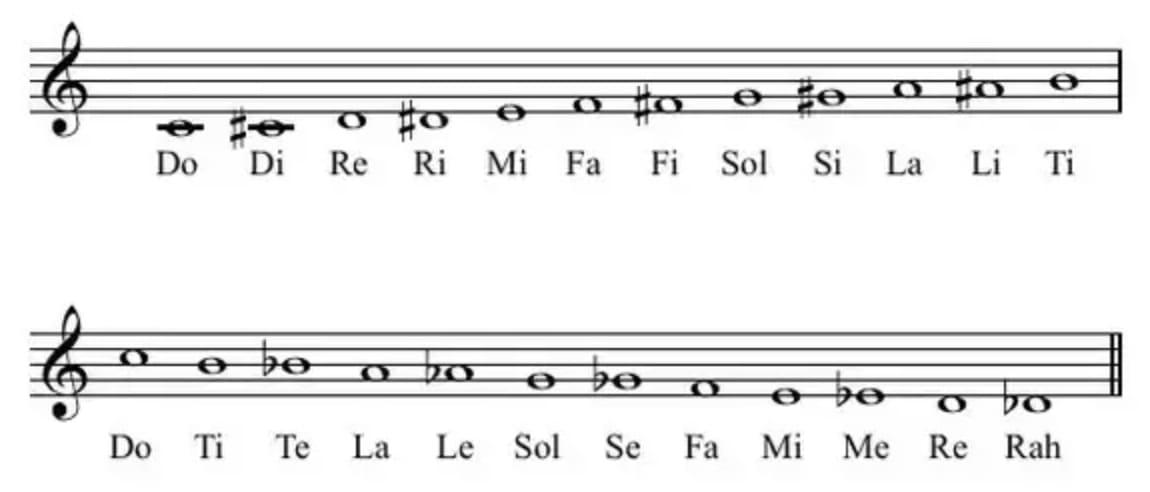
I'm going to teach you a secret. It's a secret known to few, a secret way of using parts of your brain not meant for mathematics ... for mathematics. It's part of how I (sort of) do logarithms in my head. This is a nearly purposeless skill. What's the growth rate? What's the doubling time? How many orders of magnitude bigger is it? How many years at this rate until it's quintupled? All questions of ratios and scale. Scale... hmm. 'Wait', you're thinking, 'let me check the date...'. Indeed. But please, stay with me for the logarithms. Musical intervals as ratios, and God's joke If you're a music nerd like me, you'll know that an octave (abbreviated 8ve), the fundamental musical interval, represents a doubling of vibration frequency. So if A440 is at 440Hz, then 220Hz and 880Hz are also 'A'.

Maintaining Open Source in the AI Era
<p>I've been maintaining a handful of open source packages lately: <a href="https://pypi.org/project/mailview/" rel="noopener noreferrer">mailview</a>, <a href="https://pypi.org/project/mailjunky/" rel="noopener noreferrer">mailjunky</a> (in both Python and Ruby), and recently dusted off an old Ruby gem called <a href="https://rubygems.org/gems/tvdb_api/" rel="noopener noreferrer">tvdb_api</a>. The experience has been illuminating - not just about package management, but about how AI is changing open source development in ways I'm still processing.</p> <h2> The Packages </h2> <p><strong>mailview</strong> started because I missed <a href="https://github.com/ryanb/letter_opener" rel="noopener noreferrer">letter_opener</a> from the Ruby world. When you're developing a web application, you don
Discussion
Sign in to join the discussion
No comments yet — be the first to share your thoughts!