
I Built a Game That Teaches Git by Making You Type Real Commands
<p>I work in IT, and there's one scene I keep witnessing. A developer joins the team, they're sharp, they ship features, they write clean code. And then someone asks them to rebase, and you can see the panic set in.</p> <p>It's not their fault. Git is taught badly.</p> <p>Every git tutorial I've ever seen follows the same formula: here's a diagram of branches, here's a table of commands, now go practice on your own repo and try not to destroy anything. It's like learning to drive by reading the car manual. Technically accurate. Practically useless.</p> <p>I've watched junior developers memorize <code>git add . && git commit -m "fix" && git push</code> like an incantation, terrified to deviate because the one time they tried <code>git rebase</code> they ended up in a state t
I work in IT, and there's one scene I keep witnessing. A developer joins the team, they're sharp, they ship features, they write clean code. And then someone asks them to rebase, and you can see the panic set in.
It's not their fault. Git is taught badly.
Every git tutorial I've ever seen follows the same formula: here's a diagram of branches, here's a table of commands, now go practice on your own repo and try not to destroy anything. It's like learning to drive by reading the car manual. Technically accurate. Practically useless.
I've watched junior developers memorize git add . && git commit -m "fix" && git push like an incantation, terrified to deviate because the one time they tried git rebase they ended up in a state that required a senior engineer and 45 minutes of git reflog to unfurl.
And I've watched senior developers, people with a decade of experience, avoid git bisect entirely because nobody ever showed them what it actually does in a safe environment.
So I built one.
Gitvana
Gitvana is a browser game. You play a monk climbing toward "git enlightenment" at the Monastery of Version Control. There's a Head Monk who assigns you tasks, a judgmental cat, and pixel art that looks like it belongs on a Game Boy.
But underneath the retro charm, there's a real git engine. When you type git init in the terminal, it runs git init. When you type git commit, it creates an actual commit in an actual repository. The repository lives in your browser, powered by isomorphic-git and an in-memory filesystem, but it's real. Every command, every SHA, every ref.
35 levels. 6 acts. 21 git commands. From git init to git bisect. No slides, no diagrams, no hand-holding. Just you and a terminal.
Play it at gitvana.pixari.dev. It's free, it works offline, and it doesn't want your email.
Why a Game
I could have written another tutorial. I could have built a sandbox. But I've been thinking a lot about how people actually learn, and the answer isn't "reading."
People learn by doing things that are slightly too hard, failing, figuring out why, and trying again. That's what games are. They're structured failure environments with feedback loops.
Every level in Gitvana has a target state, a set of conditions that the git repository must satisfy. "There must be exactly 3 commits on main." "The branch feature must be deleted." "The file config.yml must not contain the API key in any commit." The game validates these conditions in real time as you type commands. You see the checklist turn green, one objective at a time.
This isn't gamification bolted onto a tutorial. The game is the learning.
The Journey: 6 Acts
The structure mirrors how a developer actually encounters git:
Act 1: Awakening — The basics. init, add, commit, status, log, diff. You're a new monk. The Head Monk is patient. The cat is skeptical.
Act 2: The Middle Path — Branching, merging, cherry-pick, revert, stash. Things start getting interesting. You begin to understand that git isn't a linear timeline, it's a tree.
Act 3: Rewriting Reality — rebase, amend, squashing commits, purging secrets from history. This is where most developers tap out in real life. In Gitvana, you can't tap out. The monastery doors are locked.
Act 4: The Safety Net — reflog, blame, bisect, disaster recovery. The levels where you learn that git never truly forgets, and that reflog is the "undo" button nobody told you about.
Act 5: Advanced Techniques — Surgical staging, dependency chains, the operations that separate "uses git" from "understands git."
Act 6: Gitvana — The final trial.
Each act introduces new commands gradually, with in-game documentation you can pull up without leaving the terminal.
The Tech
The stack is deliberately minimal. Svelte 5 for the UI, xterm.js for the terminal, isomorphic-git for the git engine, and lightning-fs for the in-memory filesystem. No backend. No database. No accounts. Everything runs in your browser and your progress saves to localStorage.
The interesting engineering problems were all in the details:
Rebase was the hardest command to implement. The real git rebase is a multi-step, stateful operation. It collects commits, replays them one by one, and can pause mid-way for conflict resolution. I had to build a state machine that saves rebase progress to .git/rebase-merge/, handles --continue and --abort, and writes proper conflict markers when files clash.
Bisect maintains its own state files in .git/, just like real git. It performs an actual binary search across commits to find where a bug was introduced. In one level, you have to find which commit broke a test by using git bisect start, marking commits as good or bad, and letting the algorithm narrow it down.
The blame algorithm walks the entire commit history, builds a content-at-commit map, and attributes each line to the oldest commit where it appeared unchanged. It's not efficient. It doesn't need to be, these repos are tiny. But it's correct.
The level validator checks 12 types of conditions in real time: file existence, file content, branch existence, HEAD position, commit count, commit message patterns, merge commits, conflict state, staging area state, and tag existence. Every keystroke can potentially satisfy an objective, and the UI updates instantly.
Sound effects are procedurally generated with the Web Audio API. No audio files. Just oscillators, frequency envelopes, and square waves. Every commit gets a satisfying chiptune beep. Every merge conflict gets an ominous buzz.
What I Learned Building It
Building an educational game taught me more about git than 15 years of using it.
I had to read the git internals documentation to implement commands correctly. I discovered that git stash is essentially syntactic sugar over a specific commit-and-reset workflow. I learned that the reflog is just a flat file of HEAD movements. I finally understood, at the implementation level, why a detached HEAD happens and what it actually means in terms of refs.
There's a difference between using a tool and understanding it deeply enough to rebuild it. This project forced the second.
The Pixel Art Problem
I can't draw. At all. My artistic ability peaked at stick figures in 1993. But I wanted Gitvana to have a specific aesthetic: 16-bit monastery vibes, cherry blossoms, monks in robes, a cat that judges your commits.
I used PixelLab to generate the sprites. I'd describe what I wanted: "pixel art monk in grey robes, standing, 64x64, side view, retro game style" and iterate until it felt right. The landing page monastery, the mountain progression map, the four monk tiers (grey, brown, blue, golden) were all generated this way.
It's not hand-crafted pixel art. But it has soul. And it's consistent, which matters more than perfection when you're a solo developer trying to ship something.
Why It's Free
Because I built it for fun. That's the honest answer.
I had a problem: I wanted to understand git at the implementation level, not just the "copy this command from Stack Overflow" level. Building a game that teaches it forced me to actually learn it. Selfish motivation, great side effect.
And maybe other people have the same problem. Maybe there's a developer out there who's been using git for five years and still gets nervous when someone says "rebase." If Gitvana helps them, great. If not, I still had a blast building it.
There's no paywall, no signup, no "premium" tier. The source code is on GitHub. It's MIT licensed. Fork it, improve it, translate it, add levels.
Try It
gitvana.pixari.dev
35 levels. Real terminal. Real git. Zero setup.
Start at Act 1. Get to Gitvana. The cat is waiting.
Originally published on pixari.dev
DEV Community
https://dev.to/pixari/i-built-a-game-that-teaches-git-by-making-you-type-real-commands-495hSign in to highlight and annotate this article

Conversation starters
Daily AI Digest
Get the top 5 AI stories delivered to your inbox every morning.
More about
versionupdatefeature
AI company insiders can bias models for election interference
tl;dr it is currently possible for a captured AI company to deploy a frontier AI model that later becomes politically disinformative and persuasive enough to distort electoral outcomes. With gratitude to Anders Cairns Woodruff for productive discussion and feedback. LLMs are able to be highly persuasive, especially when engaged in conversational contexts . An AI "swarm" or other disinformation techniques scaled massively by AI assistance are potential threats to democracy because they could distort electoral results. AI massively increases the capacity for actors with malicious incentives to influence politics and governments in ways that are hard to prevent, such as AI-enabled coups . Mundane use and integration of AI also has been suggested to pose risks to democracy. A political persuas

I open sourced a production MLOps pipeline. Here is what it took to get it to PyPI and Hugging Face in one day.
<p>I have been running ML pipelines in production for few years. Tens of millions of predictions a day, real money on the line, no tolerance for guesswork.</p> <p>PulseFlow started as something I built for myself. A reference architecture I kept recreating from scratch at every company because nothing open source matched what production actually demands.</p> <p>Today I packaged it, published it to PyPI, and put a live demo on Hugging Face. Here is what it covers and how to run it in under ten minutes.</p> <h2> What PulseFlow is </h2> <p>A production-grade MLOps pipeline you can clone and run immediately. Not a tutorial. Not a toy dataset. A real stack.<br> </p> <div class="highlight js-code-highlight"> <pre class="highlight shell"><code>pip <span class="nb">install </span>pulseflow-mlops <
🚀 Build a Full-Stack Python Web App (No JS Framework Needed)
<p>Most developers assume you <em>need</em> React, Next.js, or Vue for modern web apps.</p> <p>But what if you could build a full-stack app using <strong>just Python</strong>?</p> <p>In this post, I’ll show you how to build a real web app using Reflex — a framework that lets you create frontend + backend entirely in Python.</p> <h2> 🧠 What You’ll Build </h2> <p>We’ll create a simple <strong>Task Manager App</strong> with:</p> <ul> <li>Add tasks</li> <li>Delete tasks</li> <li>Reactive UI (auto updates)</li> <li>Clean component-based structure</li> </ul> <h2> ⚙️ Setup </h2> <p>First, install Reflex:<br> </p> <div class="highlight js-code-highlight"> <pre class="highlight shell"><code>pip <span class="nb">install </span>reflex </code></pre> </div> <p>Create a new project:<br> </p> <div class
Knowledge Map
Connected Articles — Knowledge Graph
This article is connected to other articles through shared AI topics and tags.
More in Releases

Google increases the storage of its $19.99/month AI Pro subscription plan to 5TB, up from 2TB, at no additional cost (Abner Li/9to5Google)
Abner Li / 9to5Google : Google increases the storage of its $19.99/month AI Pro subscription plan to 5TB, up from 2TB, at no additional cost — Google today announced that AI Pro subscriptions now come with 5 TB of storage. — Previously, subscribers of the $19.99 per month plan got 2 TB, just like the $9.99 tier.
Orders of magnitude: use semitones, not decibels
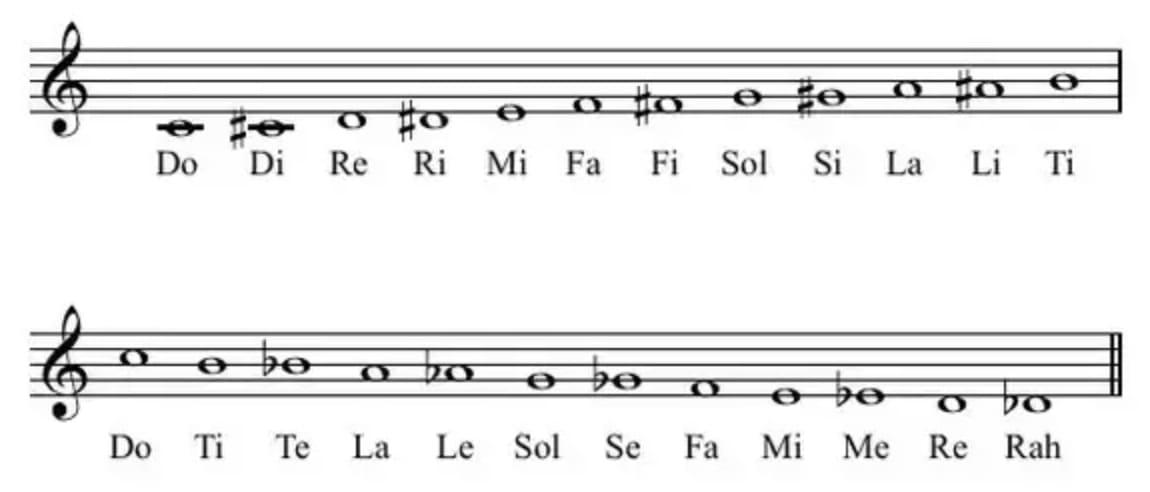
I'm going to teach you a secret. It's a secret known to few, a secret way of using parts of your brain not meant for mathematics ... for mathematics. It's part of how I (sort of) do logarithms in my head. This is a nearly purposeless skill. What's the growth rate? What's the doubling time? How many orders of magnitude bigger is it? How many years at this rate until it's quintupled? All questions of ratios and scale. Scale... hmm. 'Wait', you're thinking, 'let me check the date...'. Indeed. But please, stay with me for the logarithms. Musical intervals as ratios, and God's joke If you're a music nerd like me, you'll know that an octave (abbreviated 8ve), the fundamental musical interval, represents a doubling of vibration frequency. So if A440 is at 440Hz, then 220Hz and 880Hz are also 'A'.

Maintaining Open Source in the AI Era
<p>I've been maintaining a handful of open source packages lately: <a href="https://pypi.org/project/mailview/" rel="noopener noreferrer">mailview</a>, <a href="https://pypi.org/project/mailjunky/" rel="noopener noreferrer">mailjunky</a> (in both Python and Ruby), and recently dusted off an old Ruby gem called <a href="https://rubygems.org/gems/tvdb_api/" rel="noopener noreferrer">tvdb_api</a>. The experience has been illuminating - not just about package management, but about how AI is changing open source development in ways I'm still processing.</p> <h2> The Packages </h2> <p><strong>mailview</strong> started because I missed <a href="https://github.com/ryanb/letter_opener" rel="noopener noreferrer">letter_opener</a> from the Ruby world. When you're developing a web application, you don

Kia’s compact EV3 is coming to the US this year, with 320 miles of range
At the New York International Auto Show on Wednesday, Kia announced that its compact electric SUV, the EV3, will be available in the US "in late 2026." The EV3 has been available overseas since 2024, when it launched in South Korea and Europe. The 2027 model coming to the US appears to have the same […]
Discussion
Sign in to join the discussion
No comments yet — be the first to share your thoughts!