
Intuit's AI agents hit 85% repeat usage. The secret was keeping humans involved
When Intuit shipped AI agents to 3 million customers, 85% came back. The reason, according to the company's EVP and GM: combining AI with human expertise turned out to matter more than anyone expected — not less. Marianna Tessel, the financial software company’s EVP and GM, calls this AI-HI combination a “massive ask” from its customers, noting that it provides another level of confidence and trust. “One of the things we learned that has been fascinating is really the combination of human intelligence and artificial intelligence,” Tessel said in a new VB Beyond the Pilot podcast . “Sometimes it's the combination of AI and HI that gives you better results.” Chatbots alone aren’t the answer Intuit — the parent company of QuickBooks, TurboTax, MailChimp and other widely-used financi
When Intuit shipped AI agents to 3 million customers, 85% came back. The reason, according to the company's EVP and GM: combining AI with human expertise turned out to matter more than anyone expected — not less.
Marianna Tessel, the financial software company’s EVP and GM, calls this AI-HI combination a “massive ask” from its customers, noting that it provides another level of confidence and trust.
“One of the things we learned that has been fascinating is really the combination of human intelligence and artificial intelligence,” Tessel said in a new VB Beyond the Pilot podcast. “Sometimes it's the combination of AI and HI that gives you better results.”
Chatbots alone aren’t the answer
Intuit — the parent company of QuickBooks, TurboTax, MailChimp and other widely-used financial products — was one of the first major enterprises to go all in on generative AI with its GenOS platform last June (long before fears of the "SaaSpocalypse" had SaaS companies scrambling to rethink their strategies).
Quickly, though, the company recognized that chatbots alone weren’t the answer in enterprise environments, and pivoted to what it now calls Intuit Intelligence. The dashboard-like platform features specialized AI agents for sales, tax, payroll, accounting and project management that users can interact with using natural language to gain insights on their data, automate tasks, and generate reports.
Customers report invoices are being paid 90% in full and five days faster, and that manual work has been reduced by 30%. AI agents help close books, categorize transactions, run payroll, automate invoice reminders and surface discrepancies.
For instance, one Intuit customer uncovered fraud after interacting with AI agents and asking questions about amounts that didn’t add up. “In the beginning it was like, ‘Is that an error? And as he dug in, he discovered very significant fraud,” Tessel said.
Why humans are still in the loop
Still, Intuit operates on the principle that humans are “always accessible,” Tessel said. Platforms are built in a way that users can ask questions of a human expert when they’re not getting what they need from the AI agent, or want a human to bounce ideas off of.
“I'm not talking about product experts,” Tessel said. “I'm talking about an actual accounting expert or tax expert or payroll expert.”
The platform has also been built to suggest human involvement in “high stakes” decision-making scenarios. AI goes to a certain level, then human experts review and categorize the rest. This provides a level of confidence, according to Tessel.
“We actually believe it becomes more needed and more powerful at the right moments,” she said. “The expert still provides things that are unique.”
The next step is giving customers the tools to perform next-gen tasks like vibe coding — but with simple architectures to reduce the burden for customers. “What we’re testing is this idea of, you can actually do coding without realizing that that's what you are doing,” Tessel said.
For example, a merchant running a flower shop wants to ensure that they have the right amount of inventory in stock for Mother’s Day. They can vibe code an agent that analyzes previous years’ sales and creates purchase orders where stock is low. That agent could then be instructed to automatically perform that task for future Mother’s Days and other big holidays.
Some users will be more sophisticated and want the ability to dive deeper into the technology. “But some just want to express what they want to have happen,” Tessel said. “Because all they want to do is run their business.”
Listen to the full podcast to hear about:
- Why first-party data can create a "moat" for SaaS companies.
- Why showing AI's logic matters more than a polished interface.
- Why 600,000 data points per customer changes what AI can tell you about your business.
You can also listen and subscribe to Beyond the Pilot on Spotify, Apple or wherever you get your podcasts.
VentureBeat AI
https://venturebeat.com/orchestration/intuits-ai-agents-hit-85-repeat-usage-the-secret-was-keeping-humans-involvedSign in to highlight and annotate this article

Conversation starters
Daily AI Digest
Get the top 5 AI stories delivered to your inbox every morning.
More about
productplatformcompany
The hidden cost of GPT-4o: what every SaaS founder should know about per-user LLM spend it
<p>So you're running a SaaS that leans on an LLM. You check your OpenAI bill at the end of the month, it's a few hundred bucks, you shrug and move on. As long as it's not five figures, who cares, right?</p> <p>Wrong. That total is hiding a nasty secret: you're probably losing money on some of your users.</p> <p>I'm not talking about the obvious free-tier leeches. I'm talking about paying customers who are costing you more in API calls than they're giving you in subscription fees. You're literally paying for them to use your product.</p> <p><strong>The problem with averages</strong></p> <p>Let's do some quick, dirty math. GPT-4o pricing settled at around $3/1M tokens for input and $10/1M for output. It's cheap, but it's not free.</p> <p>Say you have a summarization feature. A user pastes in
The Wrong Way to Use AI for Debugging (And the Mental Model That Actually Works)
<p>Same AI tool. Same codebase access. Same staging incident. Three experienced engineers spent hours and couldn't find the root cause. I found it in about 20 minutes — and I barely knew what half the tools did.</p> <p>This isn't a story about juniors being better than seniors. It's about a mental model for AI collaboration that anyone can use — and why the "obvious" way most people use AI actually holds them back.</p> <h2> The Incident </h2> <p>A message hits the team Slack channel:</p> <blockquote> <p>"Staging is broken. We're investigating."</p> </blockquote> <p>The error:<br> </p> <div class="highlight js-code-highlight"> <pre class="highlight plaintext"><code>alembic current ERROR: Can't locate revision identified by 'ba29cdc8739d' FAILED: Can't locate revision identified by 'ba29cdc8
Setting Up a Production-Ready Laravel Stack: Nginx, PHP 8.4, MySQL, Valkey & Supervisor
<p>A Laravel application running on your local machine with <code>php artisan serve</code> and a SQLite database is a fundamentally different beast from a Laravel application serving thousands of requests per minute in production. The gap between development and production is not just about code. It is about infrastructure: a properly tuned web server, an optimized PHP runtime, a robust database engine, a fast cache layer, and a process manager that keeps your queue workers alive.</p> <p>Building this stack manually is a rite of passage for many developers, but it is also a minefield of configuration mistakes, security oversights, and wasted hours. Deploynix provisions this entire stack automatically when you create an App Server, configured with production-grade defaults that reflect year
Knowledge Map
Connected Articles — Knowledge Graph
This article is connected to other articles through shared AI topics and tags.
More in Products
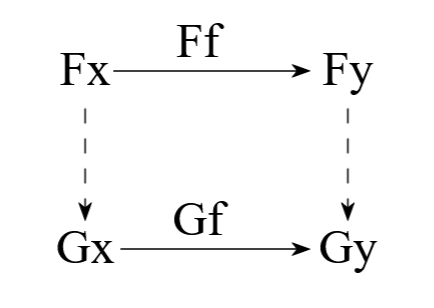
Why natural transformations?
This post is aimed primarily at people who know what a category is in the extremely broad strokes, but aren't otherwise familiar or comfortable with category theory. One of mathematicians' favourite activities is to describe compatibility between the structures of mathematical artefacts. Functions translate the structure of one set to another, continuous functions do the same for topological spaces, and so on... Many among these "translations" have the nice property that their character is preserved by composition. At some point, it seems that some mathematicians noticed that they: 1. kept defining intuitively similar properties for these different structures 2. had wayyyyyy too much time on their hands So they generalised this concept into a unified theory. Categories consist of objects m
Blazor WASM's Deputy Thread Model Will Break JavaScript Interop - Here's Why That Matters
<h2> The Problem </h2> <p>Microsoft is changing how .NET runs inside WebAssembly. When you enable threading with <code><WasmEnableThreads>true</WasmEnableThreads></code>, the entire .NET runtime moves off the browser's main thread and onto a background Web Worker — what they call the <strong>"Deputy Thread" model</strong>.</p> <p>This sounds like a good idea on paper. The UI stays responsive. .NET gets real threads. Everyone wins.</p> <p>Except it breaks JavaScript interop. Not in a subtle, edge-case way. It breaks it <em>fundamentally</em>.</p> <h2> What Actually Happens </h2> <p>In traditional Blazor WASM (no threading), .NET and JavaScript share the same thread. When JavaScript calls <code>DotNet.invokeMethod</code>, the CPU jumps from the JS stack to the C# stack and back. It's fast. I
The Wrong Way to Use AI for Debugging (And the Mental Model That Actually Works)
<p>Same AI tool. Same codebase access. Same staging incident. Three experienced engineers spent hours and couldn't find the root cause. I found it in about 20 minutes — and I barely knew what half the tools did.</p> <p>This isn't a story about juniors being better than seniors. It's about a mental model for AI collaboration that anyone can use — and why the "obvious" way most people use AI actually holds them back.</p> <h2> The Incident </h2> <p>A message hits the team Slack channel:</p> <blockquote> <p>"Staging is broken. We're investigating."</p> </blockquote> <p>The error:<br> </p> <div class="highlight js-code-highlight"> <pre class="highlight plaintext"><code>alembic current ERROR: Can't locate revision identified by 'ba29cdc8739d' FAILED: Can't locate revision identified by 'ba29cdc8
Setting Up a Production-Ready Laravel Stack: Nginx, PHP 8.4, MySQL, Valkey & Supervisor
<p>A Laravel application running on your local machine with <code>php artisan serve</code> and a SQLite database is a fundamentally different beast from a Laravel application serving thousands of requests per minute in production. The gap between development and production is not just about code. It is about infrastructure: a properly tuned web server, an optimized PHP runtime, a robust database engine, a fast cache layer, and a process manager that keeps your queue workers alive.</p> <p>Building this stack manually is a rite of passage for many developers, but it is also a minefield of configuration mistakes, security oversights, and wasted hours. Deploynix provisions this entire stack automatically when you create an App Server, configured with production-grade defaults that reflect year
Discussion
Sign in to join the discussion
No comments yet — be the first to share your thoughts!