

China's AI Education Experiment
Article URL: https://www.chinatalk.media/p/chinas-ai-education-experiment Comments URL: https://news.ycombinator.com/item?id=47625213 Points: 1 # Comments: 0
Pilot schools in China are already using AI to grade children’s artwork, monitor their facial expressions during lectures, and screen them for psychological problems — and the Ministry of Education (MOE) wants schools across the country to follow suit.1
Integrating AI into the education system has rapidly become a top priority of the Chinese central government, which is betting that AI tools can eliminate China’s vast educational inequities and make the next generation of workers more productive. The State Council highlighted education as a key area of focus in the “AI+” plan, it received a shout-out in the 15th Five-Year Plan, and in Summer 2025, the Ministry of Education (MOE) released a white paper on AI for education. This MOE document proclaims that 2025 marked the beginning of a system-wide effort to “intelligentize” 智能化 education using AI tools. But the gap between Beijing’s techno-optimism and rural China’s reality is enormous.
This report explores why the Party wants to integrate AI into education, what applications the MOE is most optimistic about, and where the barriers to successful rollout lie. We’ll limit our analysis to K-12 education today, but university AI initiatives will be the focus of our next report in this series!
Translated from Mandarin by Claude. Source: “White Paper on AI+Education Industry Applications” 《“人工智能+“ 教育行业应用白皮书》 pg. 3
In official discourse, China is said to have entered a “post-equity era” 后均衡时代 since the MOE announced that all counties had met the baseline quality level for compulsory schooling in 2021. Now, the focus is shifting from access to education to improving the quality of that education. The 14th 5-year plan (2021-2025) prioritized expanding infrastructure in rural schools through the “county-level high school revitalization initiative” (县中振兴), part of which involved equipping classrooms with ‘smart hardware’ such as digitized blackboards. During this period, the party spent significant resources to provide nearly every school with an internet connection.
Still, rural education in China faces serious structural challenges. I spoke with Leo He — a research fellow at the Hoover Institution who did NGO work in rural China from 2019 to 2023 — for a firsthand account of the situation. Every locality, he explained, has designated “elite” schools that talented students from surrounding areas compete to transfer into. The result is a system where “educational resources are systematically sucked up to the center from the periphery, leaving rural areas incredibly depleted.” While this arguably gives academically gifted students opportunities to develop their talents, it deprives most students of educational resources.
According to China’s 2020 census, only 30.6% of the population has ever attended high school (including non-academic vocational secondary school), which Stanford professor Scott Rozelle notes, “is lower than South Africa, lower than Turkey and lower than Mexico.” In 2022, roughly 40% of China’s middle school graduates didn’t go on to attend high school of any kind, and among the students that do continue their education, national policy stipulates that roughly half (“五五分流”) are funneled into non-academic vocational high schools with no path to enter college.
To understand how AI could fit into this picture, we first need to understand the political and economic factors that incentivize Beijing to care about students in the countryside. It’s not clear that more investment in education will translate to high economic growth at this point in China’s development path — the real youth unemployment rate is probably still around 20%, and there are fewer entry-level positions available just as a record number of new graduates enter the workforce. Rather, this is a priority for the Party because improving the education system is so popular.
When Rozelle’s team surveyed 1,800 rural mothers and asked what they wanted their children to aspire to, over 95% said, “I want my child to go to college.” In China, a degree from an elite college doesn’t just translate to higher earnings — it unlocks better healthcare via the hukou system, cushy “iron rice bowl” 铁饭碗 jobs, and above all, social prestige. In 2023, researchers at Stanford found that Chinese families spent an average of 17.1% of their annual household income on education, which amounts to 7.9% of annual household expenditures. (Households in the US and Japan, by comparison, dedicate just 1-2% of annual expenditures to education.) The poorest quartile of families in China devotes a staggering 56.8% of income to education, and education spending is inelastic — that is, it’s prioritized as a necessary expense — across all income levels.
As Andrew Kipnis, the anthropologist who wrote Governing Educational Desire, explained to ChinaTalk, educational reform is a priority for the party “because it’s a way of keeping people happy. If they think there’s some hope their child will attend university, that gives them some investment in the system.” But not every child can become part of the elite: “People who have gone to university won’t work in factories,” as Kipnis put it. No matter how popular it would be, Beijing is not interested in building a system where a college education is available to anyone who wants one. But within this zero-sum system, where anyone who receives an advantage is inherently disadvantaging someone else, the party still needs to make parents feel like their child is getting ahead. Infrastructure is pretty much the perfect tool for this. It makes schools feel luxurious on the ground without changing the fundamentals that make the system so unfair. Shiny new facilities deliver popularity gains immediately, and if your child doesn’t get into university years later, it’s their own damn fault.
Those incentives are shaping the world’s largest AI education experiment. China is not the only country betting that AI will transform education, but the scale and style of China’s ambitions are unmatched globally. While China started with pilot programs, South Korea’s government led with inflexible national-level implementation, spending US$850 million on an ambitious AI textbook initiative that collapsed after just 4 months. India’s edtech ecosystem is private-sector-led with little top-down guidance or regulation, which resulted in the high-profile implosion of Byju’s and a proliferation of predatory practices targeting low-income families. Japan, unlike China, pledged to make sure every student had a device before implementing AI teaching tools.
Ultimately, China’s AI education push stands out globally for the sheer range of applications the government has chosen to encourage.
We’ll start by analyzing the MOE’s new white paper on AI for education before discussing what rollout looks like in practice. White papers serve as authoritative records of government positions, in this case signaling to schools nationwide that the party wants them to use AI tools. It presents four main buckets of AI desirable use cases: (1) teacher task reduction, (2) improving rural schools, (3) analyzing student biometrics, and (4) helping students with disabilities.
Teacher task reduction, such as AI-assisted grading, lesson planning, and academic advising, is the most highly anticipated use case by primary and secondary school teachers, according to the white paper.
Using AI to grade art might sound bad, but this is how some prospective art majors are currently evaluated:
Ur Chinese Unc on Instagram: "POV: You’re an art student in Chi…
As we mentioned in our last AI education report, China has fewer teachers per student than the US, and as such, class sizes in China are often quite large. The government has declared that 45 students is supposed to be the standard primary school class size, but “super-size” (“超大班”) classrooms of 56+ students are still common.
Oversized classrooms are especially prominent in rural areas, which have struggled with persistent teacher shortages and the poaching of high-quality and experienced teachers by urban schools. To put the shortage in perspective, senior teachers “⾼级教师” only accounted for 6.8% of teachers across China as of 2023. By comparison, 26% of US public school teachers have 20+ years of experience, according to statistics from the 2020-2021 school year.
Beijing’s most recent initiative to tackle this problem is the “County-managed, school-hired” 县管校聘 system, in which teachers belong to a common pool and are assigned to a school by a county-wide authority. Teachers work on three-year contracts and must accept transfers (including urban-to-rural reallocations) that they have little control over. Teachers, unsurprisingly, seem to resent this system. Theoretically, teachers are supposed to retain their salaries and benefits packages when they are transferred to hardship posts, but rural schools have struggled to honor those commitments. Teachers are expected to stay in the same county for their entire career, since their bianzhi 编制 (personnel quota) is county-bound and non-portable, and counties accused of “poaching” teachers from other localities face administrative penalties.
Narrowing the rural education gap appears to be the second biggest priority shaping how AI gets deployed. Rural prosperity matters for CCP legitimacy for reasons we’ve discussed above. Still, students from rural areas face a massive resource gap that is reflected starkly in their gaokao scores.
The most immediate implication for rural schools has been ad-hoc, one-off lessons on how to use AI, taught by volunteer college students who lecture from cities via video conferencing. A social media post from one such volunteer was full of dismay over what they saw as outdated pedagogy in rural schools:
Before the lesson, I asked the local teacher if there was anything I should pay attention to. The teacher said, “Nothing, the students in this class are quite obedient.”... Rural areas already lag behind developed areas in educational infrastructure and philosophy by more than 10 years. For example, the word “obedient 听话” has faded from the conversations of teachers and parents in developed areas. … How will children raised using the old model cope with a rapidly changing society in the future? Twenty years is unpredictable, and the impact of a single lesson is negligible.
An AI literacy lecture in Hebei. Source.AI generates images of rural students achieving their dreams. Source.
The third goal is the collection and analysis of student data. This includes smart campuses that monitor when students arrive at school, as well as behavioral biometrics. Here are some examples praised by the white paper:
Guanggu No. 9 Primary School in Wuhan: Hubei Second Normal University introduced AI-based psychological assessment services into the school. In total, more than 800 students were evaluated. The assessments identified 15 students with unhealthy emotional fluctuations and 3 students with serious psychological problems. Through high-precision AI psychological assessment services, the school can conduct regular mental health screenings, promptly identify potential psychological issues such as anxiety and depression, and carry out early intervention and guidance. …
Zhongguancun No. 3 Primary School in Beijing: … [The school] uses intelligent systems to record students’ learning data and behavioral records. Through multidimensional analysis of students’ classroom performance, homework completion, and exam results, the school constructs comprehensive student profiles, providing a foundation for personalized instruction and assessment. At the same time… the school uses relevant technologies and tools to monitor and analyze students’ emotional states[.]
Shuanglin Primary School in Chengdu… uses smart cameras and other devices to record students’ in-class behaviors and expressions, analyzing their levels of attention and participation to provide data support for evaluating teaching quality.
There’s quite a bit of propagandizing going on in these descriptions. The hardware on the ground hasn’t yet reached panopticon levels, but the fact that the white paper posits this kind of surveillance as a desired outcome is telling.2
Finally, the white paper outlines how AI could be used to help students with disabilities. But it’s clear that this is the least developed section of the white paper — and the highlighted rollout examples are things like text-to-speech and storybook generation products, all of which were developed for mass market adoption, not specifically with disabled students in mind.
Helping disadvantaged students is a noble goal — and current evidence indicates computer-assisted learning has some benefits for Chinese students — but China’s AI education experiment faces serious challenges.
To start, there are fundamental barriers to improving rural educational outcomes that AI cannot address:
Universities in China reserve a certain portion of their seats for local students, and since universities are overwhelmingly located in urban areas, that puts rural students at a disadvantage. In 2025, 85% of Shanghai students who took the gaokao were admitted to 4-year universities, compared to 32% in Anhui. 65% of China’s children have two parents with household registrations (hukou 户口) in rural areas, but less than 5% of students at elite universities come from such families.
A hukou is a kind of internal passport that ties access to public services to one’s place of birth. People with a rural hukou often migrate to cities for work, but they do not have the right to live permanently, access healthcare, or send their children to school in the city where they work. Instead, the children of migrants are usually left in the countryside with their grandparents
School funding is tied to local economic performance, leaving village schools chronically short of resources. Students from farming communities — especially talented students — were incentivized to transfer to distant schools in wealthier parts of their counties. And since those county schools are also in depopulating areas, they readily accepted these transfers. The central government’s push to improve the infrastructure of rural schools strengthened this trend toward centralization — it’s far easier and far cheaper to expand facilities at a few large schools than for many small schools. This is why rural areas still have huge class sizes even with collapsing birthrates — when a school’s student body drops below a certain threshold, the local government decides that keeping it open is an inefficient use of funds, and the remaining students get shipped off to ever more distant schools. Rural students are left to choose between commuting long distances to school every day or being sent to boarding school.
This combination of large class sizes and long stints of time away from home means the amount of one-on-one attention these students receive has fallen off a cliff. Research on China’s boarding schools by Stanford’s Rural Education Action Program (REAP) found that “47.3 percent of [boarding school] children surveyed suffered from acute “pessimism,” 63.8 percent said that they felt “lonely,” 17.6 percent suffered from depression and 8.4 percent exhibited suicidal tendencies… boarding school students have higher levels of anxiety and demonstrate poorer social skills than students who live at home.” And now, AI tools are being deployed to monitor mental health in schools where the structure of schooling itself is a major source of psychological harm.
A 2025 study in BMC Psychology surveyed 760 children in rural China aged 6-36 months, and found that 82% had at least one developmental delay, and only 31% of families read to their children. It’s important to keep in mind that no AI tool can compensate for cognitive delays that set in before a child ever enters a classroom.
AI education tools are mostly commercially developed, and companies are hesitant to invest in creating highly customizable tool sets or specialty platforms tailored to specific disabilities or counties that can’t pay up. The market isn’t small (about half of China’s children are educated in rural areas), but rural schools are not easily generalized due to huge variance in infrastructure, staff quality, and curricula.
The price of commercially developed software products could also be a barrier to implementation. iFlytek’s (科大讯飞) flagship Changyan Smart Classroom (畅言智慧课堂) products cover the full teaching cycle from lesson prep to grading, but government procurement records show that iFlytek charged a single school ¥1,744,000 (about US$254,000 ) for the full suite of software in 2022. iFlytek’s massive Bengbu city contract — ¥1.586 billion covering 875 schools and 400,000 students — works out to roughly ¥800 per student per year. Squirrel AI (松鼠AI) offers schools free access for 1.5-2 years before subscription fees kick in, which may attract cash-strapped administrators but raises questions about long-term sustainability.
And few tools are built with rural infrastructure constraints in mind. Schools are supposed to have one computer for every 15 students according to the baseline set by the government, but a 2024 literature review found that rural areas still face a shortfall of 8.5 million computers. Students would also need devices at home to access AI homework tools — smartphones are pretty prevalent in the countryside, but asking parents to either loan their phones to their children for hours every day or buy them their own device is a tough sell.
Unless, of course, the schools issue their own devices. This should be easy in theory: hardware buildout is where China excels, and hardware-minded organizations are highly involved in promoting education digitization.3 So why has China not made universal device access a priority?
The answer is a tangle of policy, politics, and paranoia. There’s some concern about excessive screen time: a 2018 joint directive from the MOE and seven other departments mandates that electronic device use should not exceed 30% of total teaching time in order to combat myopia. An April 2025 nine-department opinion on educational digitization explicitly flags “dependency and addiction” (依赖成瘾) as a potential problem to manage.
Then there’s the cost problem: the April 2025 opinion instructs schools to “strengthen the overall planning of funds to ensure expenditures on digital education” (学校加强经费统筹,保障教育数字化支出), but budgets are already stretched thin. One school in Gansu province (官鹅沟小学) reportedly devoted two-thirds of its budget to internet fees in order to meet the basic connectivity requirement, which left no money for maintenance. The government has been burned before by the disease of “emphasizing construction while neglecting application” (“重建设、轻应用”) and is thus hesitant to shell out its own funds this time. In the early 2000s, China’s central and local governments spent nearly 2 billion RMB altogether buying DVD players, satellite receivers, and internet infrastructure for rural pilot schools — but left teacher training, maintenance, and operational costs up to the schools. Officials fulfilled their KPIs, but the equipment often fell into disuse once they left.
Finally, there’s the problem of scandals. A pattern of schools forcing families to buy overpriced tablets has poisoned the well for device distribution programs. For example, a middle school in Anhui’s Wuhe County charged students ¥5,800 (~US$841) per tablet; the principal was removed in response. CCTV warned administrators, “Do not use ‘educational informatization’ as a pretext to turn students into profit-making tools,” and the MOE issued a 2022 directive explicitly prohibiting schools from forcing tablet purchases in response.
And even if students did have devices, the software problem isn’t solved either. AI curriculum tools are largely built on teaching materials used by elite schools, in the hopes that access to elite curricula will help under-resourced areas catch up.4 But as we saw in the previous section, there are structural barriers that will make it difficult for rural schools to implement elite curricula. As Leo He described it to me: “In a properly rural place, a school is where there are 20 students from 10 different grades who are taking the same class from the same teacher — who covers maths, English, Chinese, history, geography, PE, everything. And that teacher is probably not properly qualified anyway and getting paid 1,000 to 2,000 yuan a month.”
Some rural teachers have undoubtedly begun using DeepSeek to grade assignments (which is important for improving their quality of life!), but this pales in comparison to students in urban areas who have access to a full suite of AI tools developed by China’s former private tutoring giants, which have pivoted to AI tutoring to circumvent the 2021 restrictions on human tutors.
Even if AI allows rural teachers to do their jobs more efficiently, I have doubts about whether that will result in a narrower resource gap. Wealthy students are already enjoying AI-guided museum scavenger hunts, VR-boosted science lessons, and tablets that give instant feedback on math problems. It’s clearly a good thing to improve the quality of basic education regardless of where various schools are starting from, but since colleges essentially admit students based on percentile-informed cutoffs that change yearly, it’s not obvious to me that social mobility will improve.
The white paper signals priorities — it does not regulate, it does not impose legal requirements, and it does not define the metrics for success. It also doesn’t provide funding for anything.
To understand the MOE’s penchant for unfunded mandates, we need to understand how Chinese schools are funded. Local governments bear approximately 85% of public education spending; the central government’s ~15% share is delivered primarily through transfer payments such as grants. But poorer rural counties, even when they devote a larger share of their budgets to education, simply have less to spend — and AI tools, unlike textbooks, require ongoing subscriptions and technical support that local budgets were never designed to cover.
As explained by Scott Rozelle:
“The tax base in rural China is much lower than that in the urban areas. In addition, individuals that do make it successfully through the education system in poor rural counties, almost always leave the county for higher education opportunities and work outside their rural hometown, never to return. This means there is ultimately no incentive for local government to invest more in schooling.
It’s because of this funding gap that China’s high-profile urban students and invisible rural students likely have one of the greatest education divides in the world.”
Instead, the effect of the white paper will be to reveal how responsive schools will be to the whims of Beijing. Administrators and teachers have been told that AI integration would please the party, but in what kind of environments is that a salient incentive? It’s salient to promotion-seeking officials, who could perhaps influence promotion-seeking educators — but localities are strapped for cash. That dynamic is ripe for all kinds of distorted incentives:
- Schools could prematurely cut teaching assistants, substitute teachers, and other support staff to free up funds for pet AI projects designed to replace teachers and classroom assistants. (Full-time teachers are bianzhi 编制 employees and thus cannot be laid off outright, but schools could reduce their quotas for bianzhi staff.)
- Administrators are likely to misrepresent outcomes by cherry-picking evaluation metrics that make the results look good, but are not actually analytically useful.5 By failing to define success, the white paper encourages localities to design their own rubrics to evaluate project implementation after implementation has already happened.
- Rural teachers could be less captivated by promotions, since their postings are already determined by black box negotiations between administrators and local officials, while educators in urban areas could reliably climb the career ladder by digging in at one institution. Remember, rural teachers’ careers are already centrally managed. They have been told to expect regular transfers — but why put extra effort toward integrating AI into an institution where you have no roots?
Then there’s the problem of student privacy and data leaks. The 2024 issue of China Educational Information Technology 中国教育信息化, a journal supervised by the Ministry of Education, reported that at least 63% of primary and secondary school students have dealt with spam phone calls as a result of data leaks — some of these students were even harassed by scammers armed with their precise location data.
Data privacy is legislated at the national level by a non-mandatory list of recommendations called GB/T 35273个人信息保护, which was last updated in 2020. For student data specifically, there is a related list of non-mandatory recommendations called JY/T 0643, which was released in 2025 (I’ve written a detailed footnote on how wimpy these recommendations are.6)
But the reality is that Chinese public school students have basically no expectation of information privacy. Schools routinely expect (and pressure) parents to sign agreements granting the school expansive powers over student data, and tons of personal information is shared via WeChat as opposed to a secure portal. Adding AI-powered smart classrooms to this environment is a recipe for dystopian scandals — collecting and analyzing student biometrics is an explicitly advertised functionality of this hardware. I don’t just mean faces or fingerprints either — these systems are being designed to film classrooms and analyze student body language/facial expressions to determine which students aren’t paying attention. What happens when administrators decide to sell that data to the private sector?
I worry about the fact that the MOE is so heavily emphasizing mental health interventions as a use case. The white paper greenlights using AI to decide if a student needs psychological help, but it doesn’t provide guidance on what that help should look like.7 Imagine how humiliating it would be to be pulled out of class to be questioned about your emotions because an administrator needed to fulfill a KPI.
China’s AI education experiment is still in its early days, but we should expect wide variation in results between localities due to the decentralized nature of implementation. That is seemingly by design.
The best-case scenario is that localities learn from one another’s successes and failures, and institutionalize that knowledge to help underresourced schools catch up. The unfortunate reality is that it will be very difficult to know if that is happening. Every academic I interviewed lamented how hard it has become to do fieldwork at schools in rural China, and the only teacher who was willing to speak with me works at a prestigious international school. The system is already stacked against the children of the Chinese countryside, and I can only hope that local officials will prioritize AI tools that genuinely aid learning over systems that feel high tech and make for heartwarming photoshoots.
Unfortunately, the structural incentives that undermined past educational reforms remain unchanged. There are precious few seats available in China’s universities, so local officials learned to measure success in bells and whistles instead of genuine improvements to student learning.
To close, here’s the final wish of the white paper:
“May AI become a wise companion for every learner and educator, helping humanity achieve more comprehensive and profoundly balanced development. With reverence for education and unwavering confidence in the future, let us jointly compose the magnificent chapter of AI empowering education, striving tirelessly for the inheritance and elevation of human wisdom.”
1
These specific examples come from Shenzhen Bao’an Foreign Languages School 深圳宝安外国语学校, Shuanglin Primary School in Chengdu 成都市双林小学, and Beijing Zhongguancun No. 3 Primary School 北京市中关村第三小学 respectively.
2
Example 1: Guanggu No. 9 Primary School in Wuhan.
- Students appear to be screened irregularly (not constantly) by standing in front of a machine that analyzes their facial expressions. This MOE write-up has all the makings of a publicity stunt by the university that owns the hardware (e.g., it includes a handwritten thank-you note from a student who was flagged as having mental problems).
Example 2: Zhongguancun No. 3 Primary School in Beijing.
- This school is a genuine testbed for AI tools, but outside of the white paper, news coverage of the school doesn’t mention comprehensive student profiles built on biometrics. (Although at least one other Beijing school is using AI for psychological evaluations, according to the Beijing city government)
Example 3: Shuanglin Primary School in Chengdu/
- I couldn’t find other sources to corroborate the white paper’s claim, although this school does use AI in some lessons.
3
A key platform facilitating education digitization is the China Education and Research Network (CERNET) 中国教育和科研计算机网 — a government-funded, MOE-managed organization that cut its teeth building an internet infrastructure network across China in the 1990s. Today, their website is plastered with headlines about digitizing education — invitations to attend seminars and conferences, official guidance based on Xi Jinping Thought, profiles of new AI tools and the model schools rolling them out, and press conferences with the MOE’s head of teacher affairs. In November of 2025, they published the official teachers’ guide to using AI, which is full of creative ways to use AI to instill the “correct morals” in children, such as “building a moral situation case library, intelligently pushing resources such as moral education stories and current events, generating ethical situations close to students’ lives, and assisting in value analysis and behavioral guidance.”
4
From white paper: “Breaking geographical barriers through intelligent distribution of resources — for instance, the National Smart Education Platform has aggregated 29,000 high-quality courses. AI recommendation algorithms synchronize premium courses from elite schools in Guangzhou, Shenzhen, and Beijing to underdeveloped regions like Yunnan’s Shuijiang and Gansu’s Linhe, enabling remote students to access top-tier classrooms in real time.”
5
There have been several high-profile cases of corrupt administrators massaging data like this — for example, Hengshui High School 衡水中学 (a public institution) misrepresented its elite college admission statistics by bundling its numbers with private satellite campuses under the Hengshui brand. As a side note, the principal’s son fraudulently took the gaokao in Tibet instead of his native Hebei because the score cutoff was lower there, and students report that the school uses corporal punishment liberally.
6
According to the JY/T 0643:
- “Personal Information Processors” (PIPs) should have a terms of service that a guardian must accept before collecting student data. Guardians should be able to revoke consent and request that their student’s data be deleted.
- The data should be collected with a legitimate purpose stated in the TOS. Shouldn’t collect data excessively (but no word on what kind of data crosses the line… and the mass collection and analysis of behavior/attention/mental health data is an explicitly stated goal of the AI+Education plan)
- The TOS should state what security measures are in place to protect student data. There’s no requirement to use any security measure (eg, encryption) specifically; the law only recommends having a security policy that covers “platform intrusion prevention, data leakage prevention, misuse prevention, destruction prevention, and data backup/recovery capabilities.”
- The TOS should state a retention period for students’ personal data (but there’s no limit to how long that retention period can be), and either delete the data at the end of that period or anonymize it so that you can keep storing it. Also, the document notes that you might be legally required to hand over the data at some point, so you probably shouldn’t delete anything that might be useful to law enforcement at some point.
- PIPs shouldn’t use the data for advertising purposes, unless the advertising is “in the public interest” (公益性广告) and the guardian agreed to it in the terms of service.
- If PIPs want to transfer data to a third party, they should exercise “due diligence” 尽职调查 and check that the third party will store the data securely.
7
Chinese schools are not exactly known for their progressive approaches to mental health. For example, a Henan institution for “problem children” called Yashengsi Quality Education Base 河南雅圣思素质教育基 was exposed in 2023 for beating students.
No posts
Sign in to highlight and annotate this article

Conversation starters
Daily AI Digest
Get the top 5 AI stories delivered to your inbox every morning.
More about
china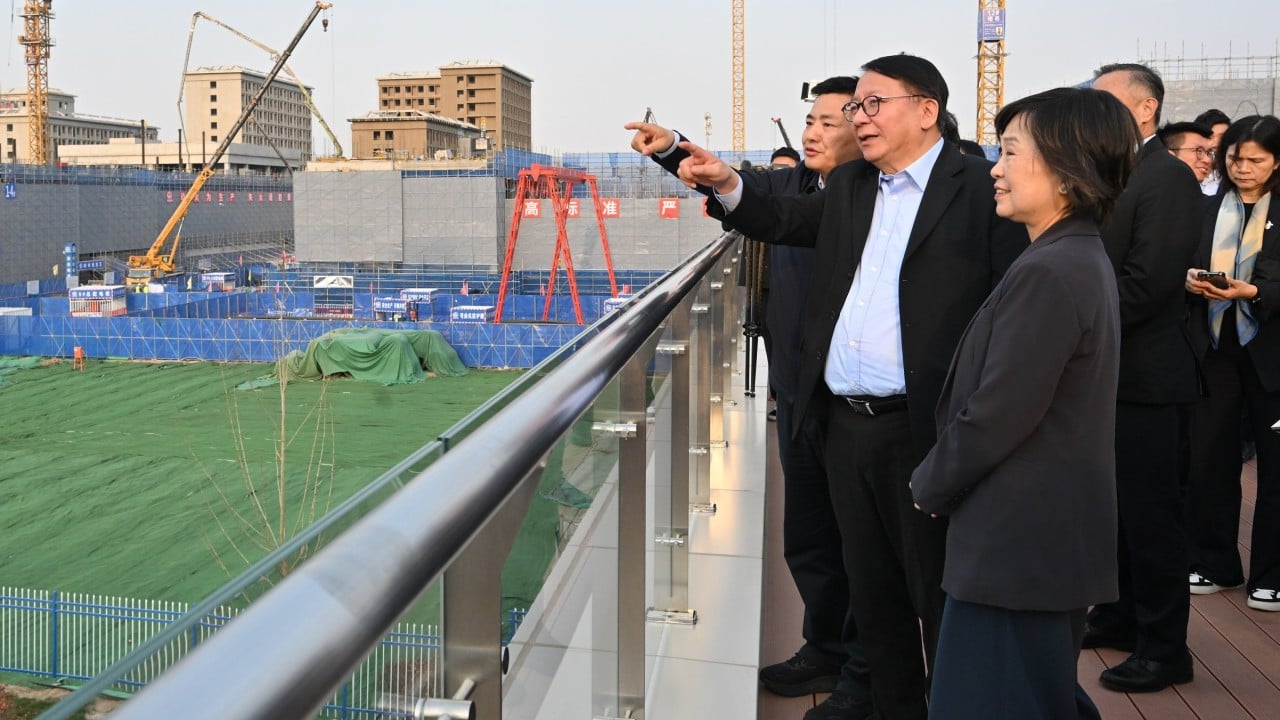
University town to be fast-tracked, Eric Chan says after mainland China visit
Hong Kong’s No 2 official has pledged to fast-track a new university town’s development following a visit to similar projects in mainland China and said authorities will devise a strategy to attract top institutions from across the border and overseas to take part. Chief Secretary Eric Chan Kwok-ki and his working group on the university town’s planning and construction, which falls under the Committee on Development of the Northern Metropolis, concluded their three-day visit to the mainland...


Knowledge Map
Connected Articles — Knowledge Graph
This article is connected to other articles through shared AI topics and tags.
More in Countries
University town to be fast-tracked, Eric Chan says after mainland China visit
Hong Kong’s No 2 official has pledged to fast-track a new university town’s development following a visit to similar projects in mainland China and said authorities will devise a strategy to attract top institutions from across the border and overseas to take part. Chief Secretary Eric Chan Kwok-ki and his working group on the university town’s planning and construction, which falls under the Committee on Development of the Northern Metropolis, concluded their three-day visit to the mainland...

PM’s bilateral meeting with H.E. Mr. Peter Pellegrini, President of the Slovak Republic, on the sidelines of the India–AI Impact Summit 2026 - PM India
PM’s bilateral meeting with H.E. Mr. Peter Pellegrini, President of the Slovak Republic, on the sidelines of the India–AI Impact Summit 2026 PM India
Discussion
Sign in to join the discussion
No comments yet — be the first to share your thoughts!