

UCL appoints Google DeepMind fellow to advance multilingual AI research - EdTech Innovation Hub
<a href="https://news.google.com/rss/articles/CBMisgFBVV95cUxQR3RqV1doQ2lCUFBMLTdSMjU1NEhDdHQ2dEhsbElyd1BLc0J6cE80VTBMYWxHdmk1a2h0NEJzckF6ZU5wN1dEUDR5aGJra1dGZUNEdExRMnFmWm1mUzFkU0tCZkpkdmNTME1JS0ZxSzlsVVNLQjFacEp1NXdJMlJfM3BQSTRlZENOWDlzQnJ1aVJ0amdZRndGYXpvN3pjaDdPMDJjcV9hdmhPTHJ5MkpEenBn?oc=5" target="_blank">UCL appoints Google DeepMind fellow to advance multilingual AI research</a> <font color="#6f6f6f">EdTech Innovation Hub</font>
Could not retrieve the full article text.
Read on Google News: DeepMind →Sign in to highlight and annotate this article

Conversation starters
Daily AI Digest
Get the top 5 AI stories delivered to your inbox every morning.
More about
research
Research across 1,372 participants and 9K+ trials details "cognitive surrender", where most subjects had minimal AI skepticism and accepted faulty AI reasoning (Kyle Orland/Ars Technica)
Kyle Orland / Ars Technica : Research across 1,372 participants and 9K+ trials details cognitive surrender , where most subjects had minimal AI skepticism and accepted faulty AI reasoning When it comes to large language model-powered tools, there are generally two broad categories of users.
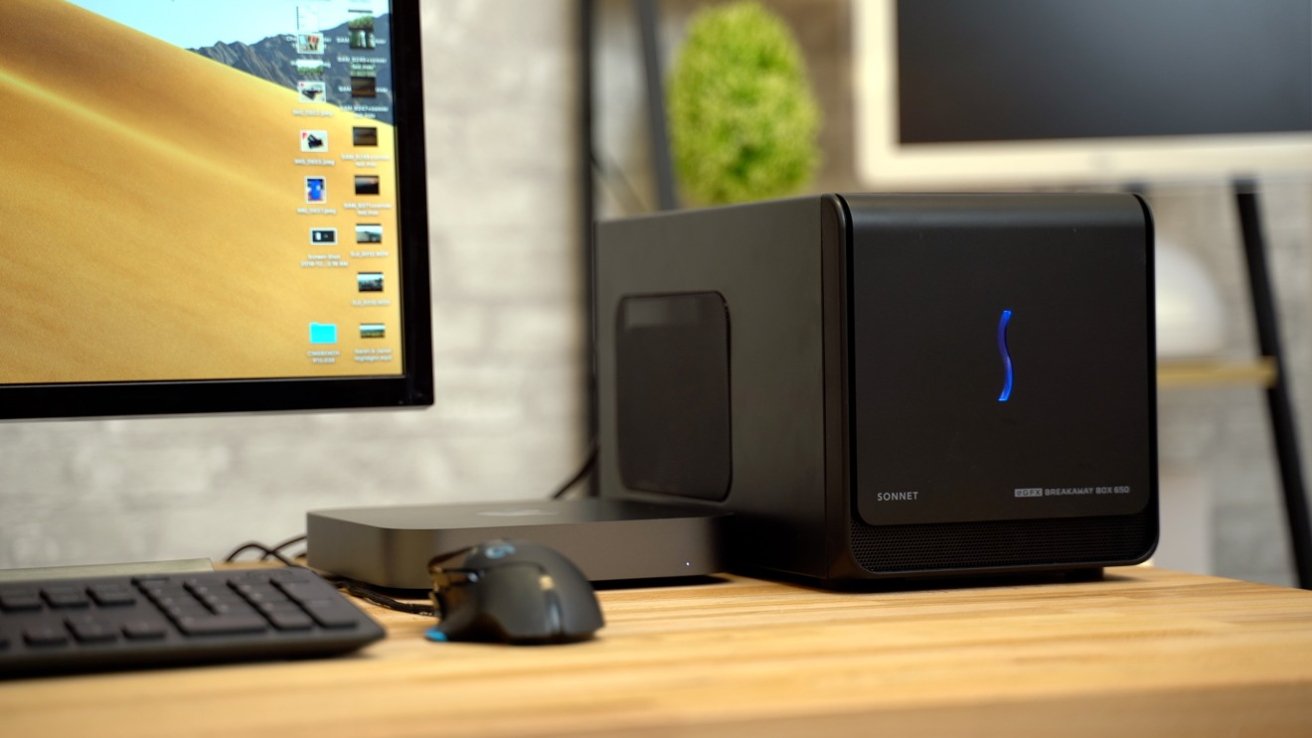
Apple reportedly signed a 3rd-party driver, by Tiny Corp, for AMD or Nvidia eGPUs for Apple Silicon Macs; it s meant for AI research, not accelerating graphics (AppleInsider)
AppleInsider : Apple reportedly signed a 3rd-party driver, by Tiny Corp, for AMD or Nvidia eGPUs for Apple Silicon Macs; it's meant for AI research, not accelerating graphics Apple has signed a driver for AMD or Nvidia eGPUs connected to Apple Silicon but there are some big caveats, and it won't improve your graphics.
Knowledge Map
Connected Articles — Knowledge Graph
This article is connected to other articles through shared AI topics and tags.
More in Products

Claude Code slash commands: the complete reference with custom examples
Claude Code slash commands: the complete reference with custom examples If you've been using Claude Code for more than a week, you've probably typed /help and seen a list of slash commands. But most developers only use /clear and /exit . Here's everything else — and how to build your own. Built-in slash commands Command What it does /help Show all commands /clear Clear conversation context /compact Summarize and compress context /memory Show what Claude remembers /review Request code review /init Initialize CLAUDE.md in current dir /exit or /quit Exit Claude Code /model Switch between Claude models /cost Show token usage and cost /doctor Check your setup The ones you're probably not using /compact vs /clear Most people use /clear when the context gets long. But /compact is usually better:

Coding Agents Have Hands But No Eyes
Sebastian Raschka just published a clean taxonomy of coding agent components . Six categories: live repo context, prompt caching, structured tools, context reduction, memory, and resumption. It's solid engineering work. But read it carefully and you'll notice something: every component serves task completion . Not a single one serves perception . The Hidden Assumption Most agent frameworks start here: given a goal, decompose it into steps, execute. This is goal-driven architecture. You tell the agent to fix a bug, write a test, refactor a function. It doesn't need to perceive its environment — you are its eyes. This works great for coding agents. The problem is when people assume this is what all agents look like. What If the Agent Looks Before It Leaps? Imagine a different starting point:

My YouTube Automation Uploaded 29 Videos in One Afternoon — Here is What Broke
My YouTube Automation Uploaded 29 Videos in One Afternoon. Here's What Broke. I run 57 projects autonomously on two servers in my basement. One of them is a YouTube Shorts pipeline that generates, reviews, and uploads videos every day without me touching it. Yesterday it uploaded 29 videos in a single afternoon. That was not the plan. Here's the postmortem — what broke, why, and the 5-minute fix that stopped it. The Architecture The pipeline works like this: Cron job fires — triggers a pipeline (market scorecard, daily tip, promo, etc.) AI generates a script — based on market data, tips, or trending topics FFmpeg renders the video — text overlays, stock footage, voiceover Review panel scores it — if it scores above 6/10, it proceeds Uploader publishes — uploads to YouTube, posts to Twitter

Discussion
Sign in to join the discussion
No comments yet — be the first to share your thoughts!