
Paramount just hired a former Google exec to help level up its tech
Paramount is hiring an accomplished tech exec to help bolster its advertising tech and product. Read the full memo from Paramount's product chief.
Exclusive
Paramount just hired a former Google exec to help level up its tech
By
James Faris
You're currently following this author! Want to unfollow? Unsubscribe via the link in your email.
Paramount Skydance is investing heavily in technology under CEO David Ellison.
Eric Thayer/Getty Images; Kristina Bumphrey/Variety via Getty Images
2026-04-02T17:58:59.536Z
-
Paramount is hiring former Google VP Hugh Williams to boost its advertising tech and product.
-
Williams also worked with Bill Gates at Microsoft and helped build Bing.
-
Read the memo from Paramount's product chief, Dane Glasgow.
Paramount Skydance is bringing on a former Big Tech executive to take its technology to the next level.
Hugh Williams, a former Google VP credited with helping invent the "infinite scroll" feature, is joining David Ellison's Paramount to bolster the company's advertising tech and product.
Williams, who's been called "the godfather of doomscrolling," was hired by Bill Gates at Microsoft to help build what became Bing. He then was a VP at eBay and Tinder before joining Google, and has since advised tech companies like DoorDash.
Paramount product chief Dane Glasgow told employees on Thursday that Williams is "a highly respected technology leader" who has "deep experience building and scaling" digital platforms.
"His track record of modernizing technology ecosystems and unlocking new business value makes him an exceptional fit for Paramount as we continue to evolve our technical capabilities and prowess," Glasgow said in a memo announcing the hire, which was obtained by Business Insider.
Williams joins Paramount as an EVP and "Executive in Residence" focused on the company's ad tech. He'll report to Glasgow, the product chief said. Williams will oversee Paramount ad sales and platform execs Travis Scoles, Todd Bender, and Paul Mahood.
Since becoming Paramount's CEO, Ellison has pledged to remake the century-old media company by "prioritizing investments in advanced technology and data."
Under Ellison's leadership, Paramount has expanded the role of its data and insights team, reorganized key technical groups, and hired former Amazon ad sales exec Danielle Carney. Last fall, Ellison brought over Glasgow from Meta and hired Jay Askinasi from Roku to be Paramount's revenue chief.
Paramount has shaken up the workplace in other ways, notably with a return-to-office order for many staffers. Most employees in the New York and Los Angeles areas returned to the office full time starting in January, while others will start reporting in September.
Read the full memo from Glasgow, Paramount's product chief, here:
Team,As we continue to transform our business and execute against our ambitious strategy, I'm excited to share that Hugh Williams will be joining Paramount as our new Executive Vice President, Executive in Residence (EIR), reporting to me.Hugh is a highly respected technology leader with deep experience building and scaling platforms at the intersection of data, commerce, and digital products. Over the course of his career, he has held senior leadership roles at some of the world's most innovative companies — including Google, eBay, and Microsoft — driving large-scale transformation across engineering, data, and product organizations. He has also advised DoorDash, Ocado, and ASOS through critical transformations and growth periods. His track record of modernizing technology ecosystems and unlocking new business value makes him an exceptional fit for Paramount as we continue to evolve our technical capabilities and prowess.Hugh's unrivaled expertise and proven ability to innovate will make him an important partner to me and our leadership team as we work together to transform our business. As an EIR, Hugh will advise on a number of crucial matters, beginning with the design and execution of a unified Advertising Product and Technology function. Doing so will help us deliver best-in-class solutions for our partners and audiences and drive our advertising technology roadmap further.A critical part of Hugh's work will be evolving our organizational design and leading change management efforts as we create a more integrated, high-performing Ad Tech function. To this end, Travis Scoles, Todd Bender and Paul Mahood will join the unified Ad Tech organization under Hugh's leadership, driving cross-functional work across our business. Partnering closely with Jay and the Ad Sales team, Cindy and the DTC team, and other key internal stakeholders, this team will ensure we are operating with clarity, speed, and accountability while continuing to advance our monetization capabilities.Please join me in welcoming Hugh to Paramount. I'm confident his leadership will help us take a significant step forward in building a modern, scalable, and high-impact advertising technology ecosystem.Cheers!Dane
-
Media
-
Exclusive
Read next
Business Insider
https://www.businessinsider.com/paramount-hires-former-google-exec-hugh-williams-ad-tech-product-2026-4Sign in to highlight and annotate this article

Conversation starters
Daily AI Digest
Get the top 5 AI stories delivered to your inbox every morning.
More about
product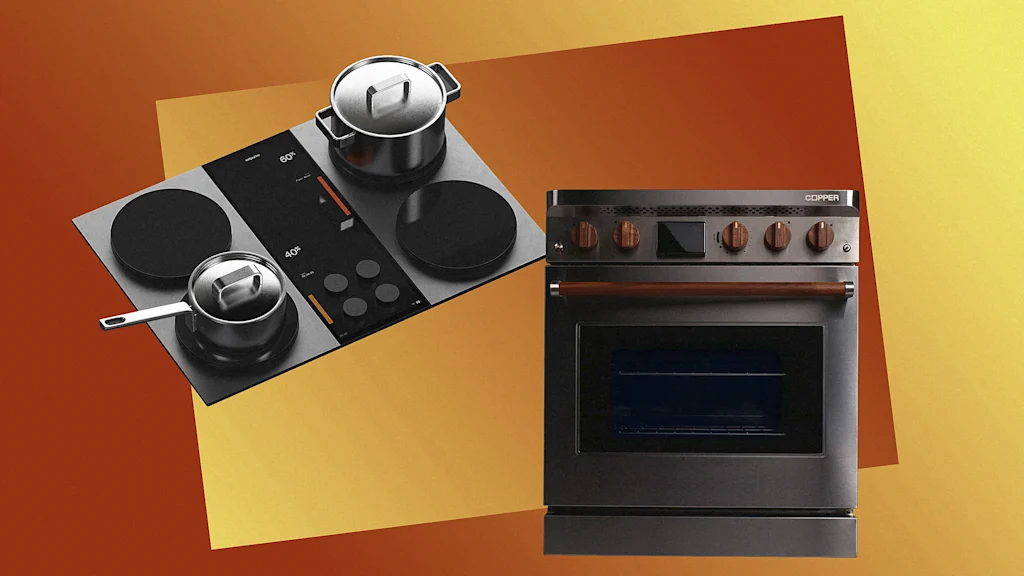
These startups both released groundbreaking induction stoves. Now they’re embroiled in a lawsuit
Impulse, a sleek induction stove that began shipping to customers last year, advertises itself as “ unlike any other induction stove ever made .” But that product is now at the center of a legal fight. Copper, another company making next-generation induction stoves , sued Impulse on Friday in federal court in Delaware for patent infringement. At the center of the dispute is a shared design choice: Both companies build stoves with batteries tucked inside, a feature that boosts performance, eases installation in homes without electrical upgrades, and doubles as energy storage to ease strain on the electric grid. It’s a novel idea, and one that Copper patented first. In a copy of the lawsuit obtained by Fast Company , Copper claims its founders began developing the technology as early as 2019

Long Term AI Memory by creator of Apache Cassandra
cortexdb.ai CortexDB is the long-term memory layer for AI systems — The problem is fundamental: today's AI agents are stateless. Every conversation starts from zero. The dominant approach to giving AI memory — having an LLM rewrite and merge your data on every single write — is lossy, fragile, and ruinously expensive. The LLM decides what to keep and what to throw away, replaces the original with a summary, and that decision is irreversible. Information it deemed unimportant today may be exactly what a future query needs tomorrow. CortexDB takes a fundamentally different approach: every piece of information is appended to an immutable event log and never overwritten. A lightweight LLM extracts entities and relationships asynchronously, but the original data is always preserved — if the ext

Prologue: After We No Longer Write Code by Hand, What Remains for Engineers?
1. A Question We Can No Longer Avoid See Figures 0-1 and 0-2 in this chapter. Over the past decade, software engineers have had a broadly stable understanding of themselves. We proved our value by writing implementations, reading systems, fixing bugs, refactoring, and aligning team collaboration. Even as job specialization became more detailed, that central image did not change: an engineer was, first of all, someone who personally built complex things. But once agents began to enter real development workflows, that image was quietly unsettled. Code implementation, test scaffolding, documentation patches, simple regressions, fault reproduction, and localized fixes—more and more steps that once depended on human hands began to be handed over to models. The change is uneven and far from comp
Knowledge Map
Connected Articles — Knowledge Graph
This article is connected to other articles through shared AI topics and tags.
More in Products

How NinjaOne went from scrappy startup to $5B challenger in the race to unify IT operations
Sal Sferlazza has a habit of building companies that get acquired. Before NinjaOne, the serial founder sold four startups in succession: a gaming studio to NCSoft, a data-protection firm to SonicWall, a network management company to Quest Software, and a file-sync service to eFolder. Each one solved a narrow IT problem. Each one got swallowed [ ] This story continues at The Next Web

Nvidia shows The Witcher 4 forest demo running path tracing on an RTX 4070
Nvidia has published its full GDC 2026 presentation on its upcoming path tracing and micropolygon tools. The video offers a new glimpse at assets and engine functionality that will feature in the PC version of The Witcher 4. Read Entire Article
These startups both released groundbreaking induction stoves. Now they’re embroiled in a lawsuit
Impulse, a sleek induction stove that began shipping to customers last year, advertises itself as “ unlike any other induction stove ever made .” But that product is now at the center of a legal fight. Copper, another company making next-generation induction stoves , sued Impulse on Friday in federal court in Delaware for patent infringement. At the center of the dispute is a shared design choice: Both companies build stoves with batteries tucked inside, a feature that boosts performance, eases installation in homes without electrical upgrades, and doubles as energy storage to ease strain on the electric grid. It’s a novel idea, and one that Copper patented first. In a copy of the lawsuit obtained by Fast Company , Copper claims its founders began developing the technology as early as 2019
[R] Differentiable Clustering & Search !
Hey guys, I occasionally write articles on my blog, and I am happy to share the new one with you : https://bornlex.github.io/posts/differentiable-clustering/ . It came from something I was working for at work, and we ended up implementing something else because of the constraints that we have. The method mixes different loss terms to achieve a differentiable clustering method that takes into account mutual info, semantic proximity and even constraints such as the developer enforcing two tags (could be documents) to be part of the same cluster. Then it is possible to search the catalog using the clusters. All of it comes from my mind, I used an AI to double check the sentences, spelling, so it might have rewritten a few sentences, but most of it is human made. I've added the research flair
Discussion
Sign in to join the discussion
No comments yet — be the first to share your thoughts!