

Never stop disrupting yourself; introducing the Fin API platform
Last week, we announced Apex, the world's first specialized customer service LLM. We're now going to allow you to access all of this power and all of our core models directly via API.
Today we’re announcing the launch of the Fin API platform.
Our best-in-class vertical customer service models that power Fin are now available for you to mix and match and deploy at insane scale to create the perfect customer agent for you. In this post, I’ll explain exactly what we are announcing, why we’re doing so, and how I think we’re going to see a lot more of this in the industry at large.
The news
Fin is a customer agent platform that at present resolves over 2M customer issues a week, growing at a rapid exponential pace. It’s relied on by the best brands, large and small, in every vertical you can imagine. From Atlassian and Riot Games, to smaller hot upstarts like Mercury and Polymarket. It runs on a family of models trained by our AI group. Last week, we announced Apex, which is the world’s first specialized customer service LLM. In production tests over the last 6 months, it beat every single frontier model, including those from Anthropic and OpenAI, on resolution rate, latency, hallucination rate, and cost.
We’re now going to allow you to access all of this power and all of our core models directly via API, with contracts starting at $250k per year, and usage rates that are by far the cheapest in the industry for each of the model’s subcategories.
But why?
It’s simply that our customers want it. We hear from people far and wide who want to build their own agents. So starting today we’re providing three ways to do so.
First, for the vast majority of companies, they will want to run their operations on the Fin Agent Platform. We have ~8k companies on it today. This takes care of the needs of 99% of customers and allows them to configure it easily without the exhausting consulting engagements of our startup competitors. It delivers the very best resolution rates in the industry, but straight out of the box.
Second, we have also had an offering for people who want to present Fin in a unique context. For this they can use the Fin Agent API. In this mode, you get all of the magic of the Fin platform, but you don’t have to use our messenger (or our email or voice or other prebuilt channel) and can display the agent in bespoke ways.
But there are also companies out there who want to build hyper-specific and specialized agents for their business. Perhaps they want to build an agent that does service and is also a product agent that lets users interact with their product. In this world, the best and most obvious decision for them is to use Apex and the collection of models we use in the broader system, because they’re trained for exactly that purpose—unlike the generalized models. This is our third and new offering launching today.
We’re also excited to see new startups build Fin-like businesses that cater to hyper-specific verticals too. Fin for dentists? Why not? Fin for car dealerships? Sure. We’re never going to build for these specific verticals, but we’d love someone else to. In fact, if any of our direct startup competitors would like to substantially improve their offering and give us a little cut of the action, we’ll be more than happy to license our models to them too. Decagon, Sierra, and the rest, you know where to reach me. Let’s be friends! :)
Coming soon to an agent company near you; the defensive reason
Unlike many, I’m not 100% ready to write off all of software. But it’s true to say that the software landscape is certainly about to change dramatically before our eyes. In extremely recent times, differentiation came from software functionality that acted as a moat because it was hard to build. But building software is simply less hard now.
We’ve already managed to more than double our measurable productivity on our engineering team. We’ve also created insanely deep new products that previously existed as separate businesses, built by single Intercom engineers, in literally one week.
Going forward, the differentiation that came from features and interface is, at the very least, going to diminish. Serious software companies must not only move from being a features company to an agents company, because the work they used to assist with that was done by humans will now be done by agents, but they must also be building those agents on differentiated AI. We do believe that more and more value will accrue to the model layer, and so, as we did when we started to disrupt our software business with our agent business, we will now begin the processes of disrupting our agent business with our AI business.
Where this all ends is anyone’s guess, but it’s hard to not imagine we’ll see this with many other companies too. For now, we’re excited to be out there first and best with this new platform and business and we can’t wait to see what people build.
Sign in to highlight and annotate this article

Conversation starters
Daily AI Digest
Get the top 5 AI stories delivered to your inbox every morning.
More about
modelannounceplatform
Hamdan bin Mohammed directs Dubai government entities to integrate all individual and business services into a unified digital platform - Government of Dubai Media Office
Hamdan bin Mohammed directs Dubai government entities to integrate all individual and business services into a unified digital platform Government of Dubai Media Office

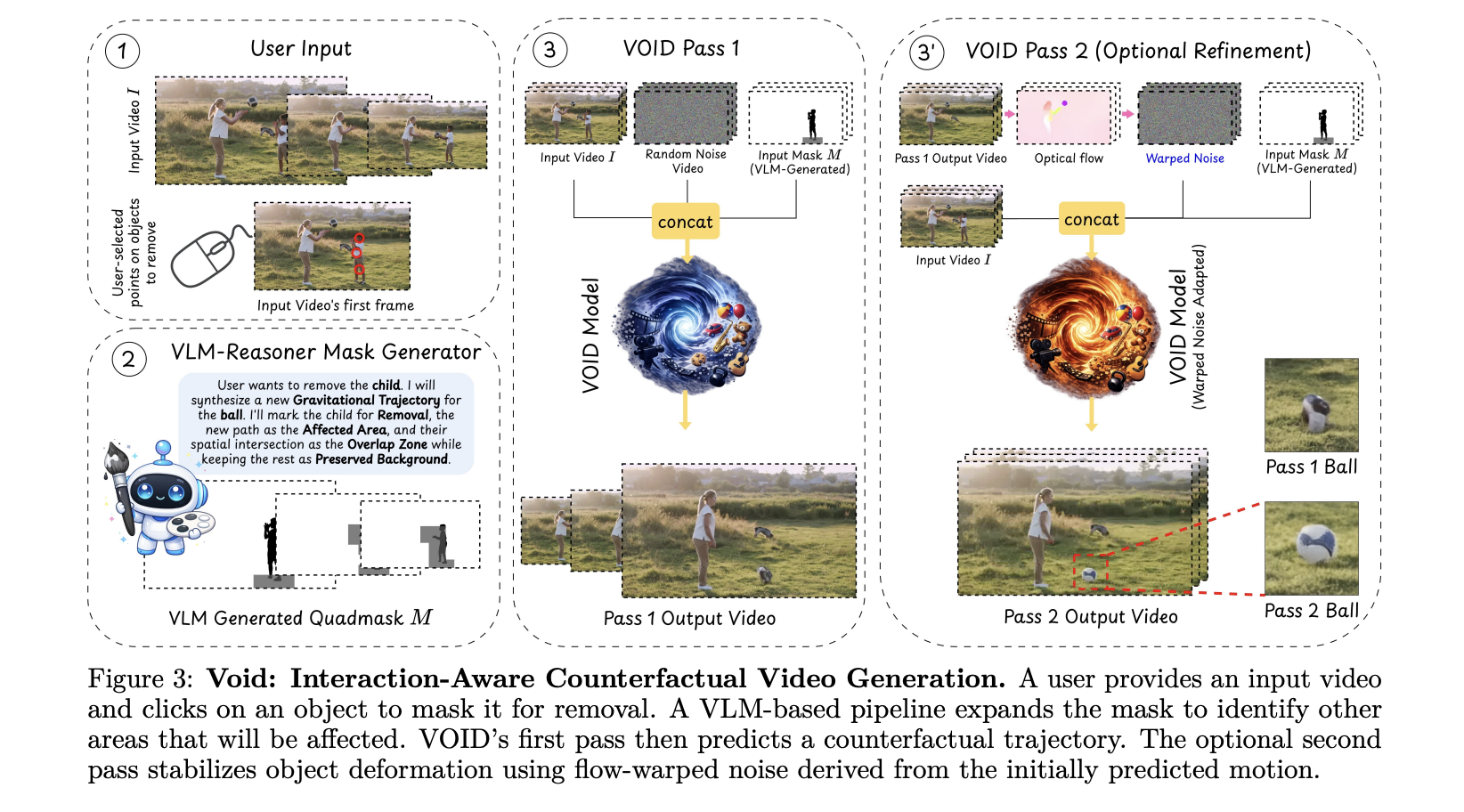
Netflix AI Team Just Open-Sourced VOID: an AI Model That Erases Objects From Videos — Physics and All
Video editing has always had a dirty secret: removing an object from footage is easy; making the scene look like it was never there is brutally hard. Take out a person holding a guitar, and you re left with a floating instrument that defies gravity. Hollywood VFX teams spend weeks fixing exactly this kind of problem. [ ] The post Netflix AI Team Just Open-Sourced VOID: an AI Model That Erases Objects From Videos — Physics and All appeared first on MarkTechPost .
Knowledge Map
Connected Articles — Knowledge Graph
This article is connected to other articles through shared AI topics and tags.
More in Models


b8661
llama: add custom newline split for Gemma 4 ( #21406 ) macOS/iOS: macOS Apple Silicon (arm64) macOS Intel (x64) iOS XCFramework Linux: Ubuntu x64 (CPU) Ubuntu arm64 (CPU) Ubuntu s390x (CPU) Ubuntu x64 (Vulkan) Ubuntu arm64 (Vulkan) Ubuntu x64 (ROCm 7.2) Ubuntu x64 (OpenVINO) Windows: Windows x64 (CPU) Windows arm64 (CPU) Windows x64 (CUDA 12) - CUDA 12.4 DLLs Windows x64 (CUDA 13) - CUDA 13.1 DLLs Windows x64 (Vulkan) Windows x64 (SYCL) Windows x64 (HIP) openEuler: openEuler x86 (310p) openEuler x86 (910b, ACL Graph) openEuler aarch64 (310p) openEuler aarch64 (910b, ACL Graph)
Discussion
Sign in to join the discussion
No comments yet — be the first to share your thoughts!