

Microsoft’s $10 Billion Japan Bet Shows the Next AI Battleground Is National Infrastructure
Hey there, little explorer! Guess what? A big company called Microsoft, which makes computers work, is doing something super cool in a faraway land called Japan!
Imagine Japan is like a big playground, and Microsoft wants to make it the best AI playground ever!
Instead of just giving them new toys (like fancy AI apps), Microsoft is building super-duper strong swings and slides (that's like special computer buildings called "data centers") and making sure the playground is super safe from bad guys (that's "cybersecurity"). They're also teaching everyone how to play with the new toys!
It's like building the whole playground from the ground up, so everyone can play with AI safely and smartly! Isn't that neat?
Microsoft’s decision to invest $10 billion in Japan between 2026 and 2029 looks like one of those stories that is easy to file under ‘big tech spends big again’. That would be a mistake. This is not just another data center expansion. It is a clear signal that the next phase of the AI race is shifting away from flashy model launches and toward something much harder to copy: national-scale infrastructure, workforce readiness, and cyber resilience. According to Reuters and follow-on reporting from Bloomberg and The Japan Times, the package is aimed at expanding AI infrastructure in Japan, deepening cybersecurity cooperation with the government, and supporting large-scale skills development. That combination matters. Microsoft is not merely selling cloud capacity into an attractive market. It
Microsoft’s decision to invest $10 billion in Japan between 2026 and 2029 looks like one of those stories that is easy to file under ‘big tech spends big again’. That would be a mistake. This is not just another data center expansion. It is a clear signal that the next phase of the AI race is shifting away from flashy model launches and toward something much harder to copy: national-scale infrastructure, workforce readiness, and cyber resilience.
According to Reuters and follow-on reporting from Bloomberg and The Japan Times, the package is aimed at expanding AI infrastructure in Japan, deepening cybersecurity cooperation with the government, and supporting large-scale skills development. That combination matters. Microsoft is not merely selling cloud capacity into an attractive market. It is trying to become part of the operating layer of how a major economy adopts AI safely and at scale.
That is a much bigger play than product distribution. It is platform entrenchment.
For the last two years, most of the AI conversation has been dominated by models: who has the best frontier system, who shipped the smartest coding agent, who cut latency, who won benchmark wars. Those things still matter, obviously. But enterprise and public-sector adoption has started exposing a more practical truth. The model is only one piece of the stack. If countries and enterprises cannot run AI workloads reliably, govern them properly, secure them against abuse, and train enough people to use them, then the best model in the world does not really matter.
That is why this Microsoft move is interesting. Japan is one of the most strategically important markets for enterprise technology in the world. It has a huge industrial base, serious public-sector modernization needs, deep concerns about cyber resilience, and a well-documented urgency around productivity. AI fits all of those pressures. If Microsoft can help become the trusted backbone for AI deployment there, it wins far more than short-term infrastructure revenue. It gets long-duration influence over where workloads run, how copilots are adopted, how security standards evolve, and which enterprise stack becomes the default.
There is also a geopolitical layer here that should not be ignored. AI infrastructure is increasingly being treated like strategic infrastructure. Countries do not want to be passive consumers of intelligence systems built elsewhere with opaque governance and fragile supply chains. They want local compute, trusted vendors, talent development, and stronger alignment with national security priorities. Microsoft’s investment seems designed to meet that moment. It says, in effect: we are not just offering software licences; we are willing to help build the AI capacity of the country itself.
The cybersecurity angle is especially important. As more organisations move from AI experimentation into production workflows, the attack surface gets nasty fast. Prompt injection, data exfiltration, over-permissioned agents, model abuse, and supply chain compromise are no longer theoretical problems for conference slides. They are operational issues. Tying AI infrastructure investment directly to cyber defence cooperation is smart because it acknowledges reality: AI adoption without security maturity is just a bigger blast radius waiting to happen.
The talent piece may end up being the most durable advantage of all. Japan Times reported that the broader plan includes training up to a million AI engineers through 2029. Whether that exact target is fully reached or not, the direction is what matters. The real bottleneck in enterprise AI is not just GPUs. It is competent humans who can redesign workflows, govern models, evaluate risk, and actually ship systems that create value. The vendors that help create those humans will have a stronger moat than the vendors that merely advertise the most capable model.
It also puts pressure on rivals. Google, AWS, OpenAI, Anthropic, and the rest cannot think only in terms of APIs and seat licenses anymore. The market is moving toward bundled national propositions: infrastructure plus security plus skills plus policy alignment. That is a different game. It rewards balance sheets, local partnerships, and the ability to sit in the same room as governments and CIOs and talk credibly about resilience, sovereignty, and long-term operating models.
For founders and builders, the takeaway is pretty simple. AI’s next winners may not be the companies with the flashiest demo this month. They may be the ones quietly embedding themselves in the physical, regulatory, and human layers that make adoption possible. The center of gravity is moving from novelty to deployment. From model capability to institutional trust. From ‘what can this AI do?’ to ‘can we bet our company or country on this stack?’
That is why Microsoft’s Japan move matters beyond Japan. It captures where the market is going. AI is becoming infrastructure policy, workforce policy, and security policy all at once. Once you see that clearly, $10 billion does not look excessive. It looks like the cost of trying to own the next computing era.
Sign in to highlight and annotate this article

Conversation starters
Daily AI Digest
Get the top 5 AI stories delivered to your inbox every morning.
More about
modelbenchmarktraining
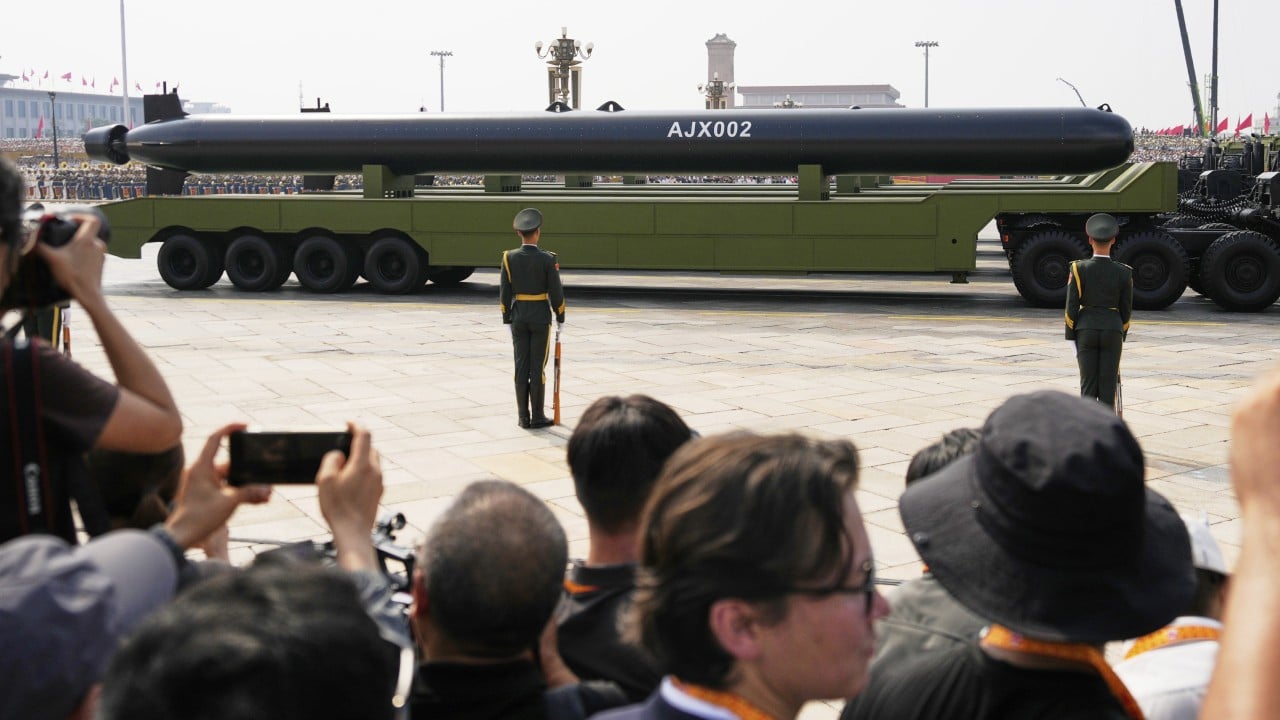
China not targeting US West Coast with ultra-large underwater drones: lead scientist
China’s unmanned submersibles now rank as the world’s largest, with last year’s military parade showcasing two models (HSU001 and AJX002) approaching 20 metres (66 feet) in length. Satellite imagery analysed by Western media also revealed a classified variant exceeding 40 metres at a naval installation, triggering international concern – particularly in the United States. These dimensions created a brand new class of drones known as extra-extra-large uncrewed underwater vehicles (XXLUUVs). They...

How China is transforming Hong Kong into a strategic hub
Hong Kong’s first five-year plan is expected to guide the city’s future development. Never before has the city attempted a comprehensive plan in the style of mainland China, signalling a major shift in how it approaches long‑term growth. The real question is not why a laissez‑faire economy must adopt a new model but how this transformation will unfold. This exercise is unprecedented on multiple fronts. First, it departs from Hong Kong’s long-standing reliance on market forces and incremental...
Knowledge Map
Connected Articles — Knowledge Graph
This article is connected to other articles through shared AI topics and tags.
More in Products


b8664
server: Fix undefined timing measurement errors in server context ( #21201 ) Co-authored-by: Dan Hoffman [email protected] macOS/iOS: macOS Apple Silicon (arm64) macOS Intel (x64) iOS XCFramework Linux: Ubuntu x64 (CPU) Ubuntu arm64 (CPU) Ubuntu s390x (CPU) Ubuntu x64 (Vulkan) Ubuntu arm64 (Vulkan) Ubuntu x64 (ROCm 7.2) Ubuntu x64 (OpenVINO) Windows: Windows x64 (CPU) Windows arm64 (CPU) Windows x64 (CUDA 12) - CUDA 12.4 DLLs Windows x64 (CUDA 13) - CUDA 13.1 DLLs Windows x64 (Vulkan) Windows x64 (SYCL) Windows x64 (HIP) openEuler: openEuler x86 (310p) openEuler x86 (910b, ACL Graph) openEuler aarch64 (310p) openEuler aarch64 (910b, ACL Graph)
Discussion
Sign in to join the discussion
No comments yet — be the first to share your thoughts!