

Dynamic Graph Neural Network with Adaptive Features Selection for RGB-D Based Indoor Scene Recognition
arXiv:2604.00372v1 Announce Type: new Abstract: Multi-modality of color and depth, i.e., RGB-D, is of great importance in recent research of indoor scene recognition. In this kind of data representation, depth map is able to describe the 3D structure of scenes and geometric relations among objects. Previous works showed that local features of both modalities are vital for promotion of recognition accuracy. However, the problem of adaptive selection and effective exploitation on these key local features remains open in this field. In this paper, a dynamic graph model is proposed with adaptive node selection mechanism to solve the above problem. In this model, a dynamic graph is built up to model the relations among objects and scene, and a method of adaptive node selection is proposed to ta
View PDF HTML (experimental)
Abstract:Multi-modality of color and depth, i.e., RGB-D, is of great importance in recent research of indoor scene recognition. In this kind of data representation, depth map is able to describe the 3D structure of scenes and geometric relations among objects. Previous works showed that local features of both modalities are vital for promotion of recognition accuracy. However, the problem of adaptive selection and effective exploitation on these key local features remains open in this field. In this paper, a dynamic graph model is proposed with adaptive node selection mechanism to solve the above problem. In this model, a dynamic graph is built up to model the relations among objects and scene, and a method of adaptive node selection is proposed to take key local features from both modalities of RGB and depth for graph modeling. After that, these nodes are grouped by three different levels, representing near or far relations among objects. Moreover, the graph model is updated dynamically according to attention weights. Finally, the updated and optimized features of RGB and depth modalities are fused together for indoor scene recognition. Experiments are performed on public datasets including SUN RGB-D and NYU Depth v2. Extensive results demonstrate that our method has superior performance when comparing to state-of-the-arts methods, and show that the proposed method is able to exploit crucial local features from both modalities of RGB and depth.
Subjects:
Computer Vision and Pattern Recognition (cs.CV)
Cite as: arXiv:2604.00372 [cs.CV]
(or arXiv:2604.00372v1 [cs.CV] for this version)
https://doi.org/10.48550/arXiv.2604.00372
arXiv-issued DOI via DataCite (pending registration)
Submission history
From: Muyao Peng [view email] [v1] Wed, 1 Apr 2026 01:43:56 UTC (1,452 KB)
Sign in to highlight and annotate this article

Conversation starters
Daily AI Digest
Get the top 5 AI stories delivered to your inbox every morning.
More about
modelneural networkannounce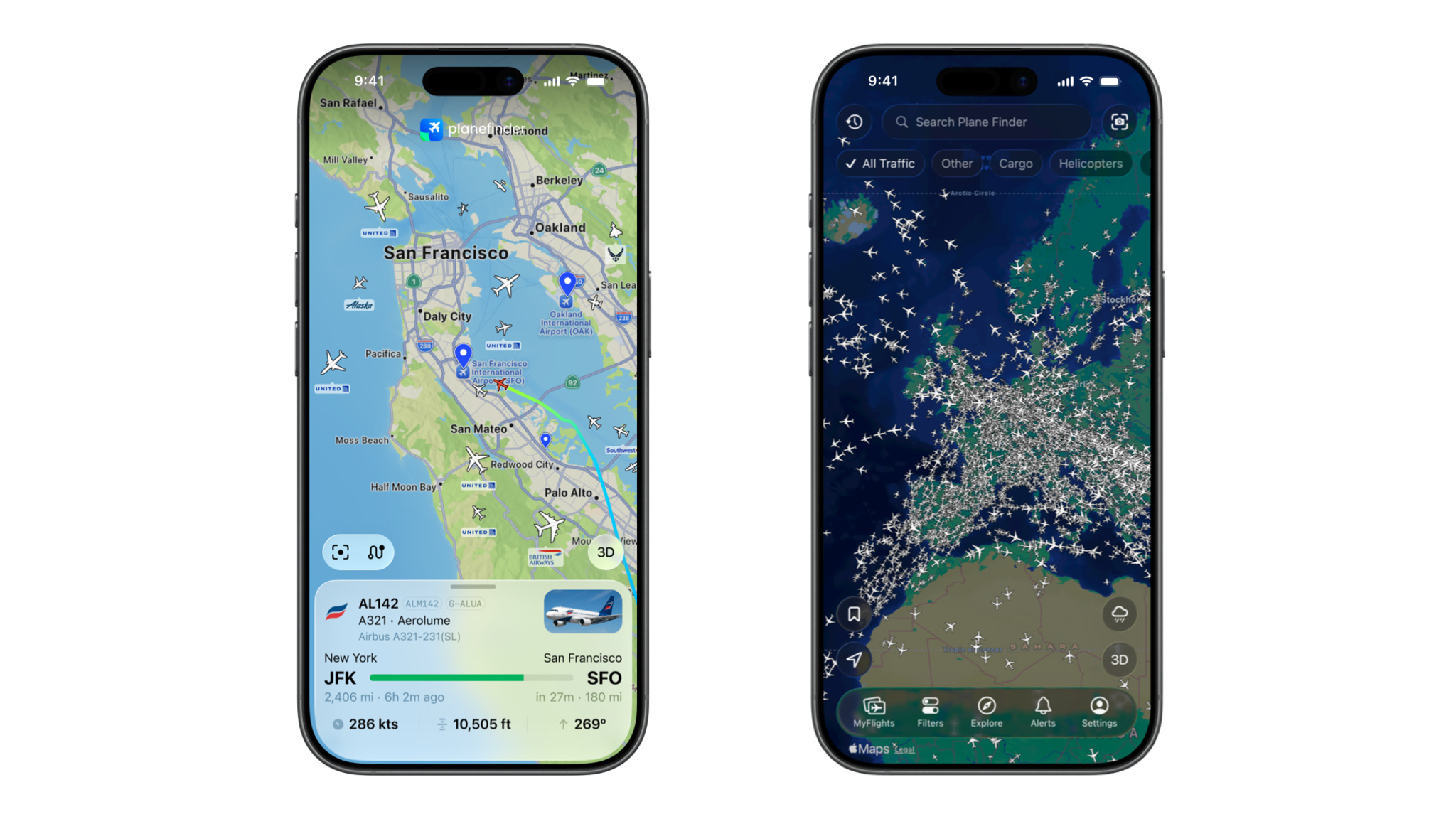
Q A: How Plane Finder set itself up for the long haul
Plane Finder is a sparkling example of what happens when a small team grows with a platform. Launched in 2009, Plane Finder didn’t scale over the years by adding headcount, vendors, or complexity. Instead, founders Jodie and Lee Armstrong made a long-term bet on Apple’s ecosystem — staying native, sticking close to first-party tools, and reading platform signals early. And over time, an app that began as “planes on a map” evolved into a full end-to-end flight-tracking business — one that includes a global network of physical hardware — built and operated by a team of just eight people. We talked to the married founders about their early days, the new design and Liquid Glass, and the challenges of running a global flight tracking network. Plane Finder Available on: iPhone, iPad, Apple Watch

OpenClaw SaaS vs Self-Hosting: Which One Should You Choose in 2026?
Managed OpenClaw hosting is booming. Over a dozen services launched in early 2026, some hitting $20K MRR in their first week. The demand is real. But should you pay $10-30/month for something you can run yourself in 10 minutes? What You Get with Managed Hosting The pitch is simple: sign up, pick a plan, your bot is live. No Docker, no config files, no terminal. Typical pricing: 1 bot : $10-15/month 2-3 bots : $20-30/month Custom plans : $50+/month What you give up: your data sits on their servers. Every conversation, every file your bot processes, every memory it forms. If you're using bots for financial analysis, competitive research, or internal ops — that's a real concern. What Self-Hosting Looks Like Now A year ago, self-hosting OpenClaw was genuinely painful. Docker configs, port mapp

7 Best AI Coding Assistant Tools in 2026
“The future of coding is not fewer developers. It’s developers with superpowers.” - Andrew Ng, Founder of DeepLearning.AI What is an AI Coding Assistant? An AI coding assistant helps developers write and fix code faster. It works inside a coding editor and gives suggestions as developers type. A real AI coding assistant tool does more than just autocomplete. It can… Suggest code in real time Explain existing code Help fix bugs Refactor messy logic Follow your project style Learn from your repo over time Most live inside IDEs like VS Code. They feel like an intelligent pair programmer who matches your vibe and is always ready to help. However, there are notable differences between AI coding assistants and AI code generators. And this is important. Any size of engineering team can start usin
Knowledge Map
Connected Articles — Knowledge Graph
This article is connected to other articles through shared AI topics and tags.
![[D] CVPR 2026 Travel Grant/Registration Waiver](https://d2xsxph8kpxj0f.cloudfront.net/310419663032563854/konzwo8nGf8Z4uZsMefwMr/default-img-circuit-gold-PMJWD5qsqGfXwX8w9a97Cb.webp)



Discussion
Sign in to join the discussion
No comments yet — be the first to share your thoughts!