
Decision Trees from Data: Building Context-Aware Models
Context Graphs: From Outcomes to Decisions ===================================== Most enterprise systems are very good at answering one question: “What happened?” They provide a treasure trove of data on every event, transaction, and interaction that occurs within the system. However, when it comes to more complex questions like “Why did it happen?”, they often fall short. The Limitations of Traditional Approaches Traditional systems use a variety of techniques to answer questions about outcomes, such as: Logging : recording events as they occur Auditing : storing historical data on changes and updates Monitoring : tracking system performance and resource utilization While these approaches provide valuable insights into what happened, they rarely offer any context or explanations for why i
Context Graphs: From Outcomes to Decisions
=====================================
Most enterprise systems are very good at answering one question: “What happened?” They provide a treasure trove of data on every event, transaction, and interaction that occurs within the system. However, when it comes to more complex questions like “Why did it happen?”, they often fall short.
The Limitations of Traditional Approaches
Traditional systems use a variety of techniques to answer questions about outcomes, such as:
-
Logging: recording events as they occur
-
Auditing: storing historical data on changes and updates
-
Monitoring: tracking system performance and resource utilization
While these approaches provide valuable insights into what happened, they rarely offer any context or explanations for why it happened. This is because traditional systems are typically designed to focus on the outcome, rather than the underlying reasons.
Enter Context Graphs
Context graphs are a relatively new approach that aims to address this limitation by providing a more comprehensive understanding of events and outcomes. By analyzing relationships between entities, events, and decisions, context graphs offer a rich tapestry of contextual information that can help explain why something happened.
What is a Context Graph?
A context graph is a data structure that represents the relationships between entities, events, and decisions in a system. It consists of nodes and edges that encode various types of context, such as:
-
Entity relationships: who is involved in an event or decision?
-
Event causalities: what triggered a particular event or outcome?
-
Decision hierarchies: how were decisions made and by whom?
Building a Context Graph
To build a context graph, you'll need to collect and integrate data from various sources. Here are some steps to get you started:
-
Data collection: gather event, entity, and decision data from logs, databases, and other systems.
-
Entity identification: identify unique entities and their relationships using techniques like entity recognition or graph-based clustering.
-
Event causal analysis: analyze the causal relationships between events using techniques like temporal reasoning or Bayesian networks.
Code Example: Building a Context Graph with Python
Here's a simple example of how you can build a context graph using Python:
import networkx as nx from nx_agraph import node_from_idimport networkx as nx from nx_agraph import node_from_idCreate an empty directed graph
G = nx.DiGraph()
Add entities as nodes
entities = ['customer', 'order', 'product'] for entity in entities: G.add_node(entity)
Add relationships between entities as edges
relationships = [('customer', 'order'), ('order', 'product')] for relation in relationships: G.add_edge(relation)
Visualize the context graph using NetworkX and Matplotlib
pos = nx.spring_layout(G) nx.draw_networkx_nodes(G, pos, node_color='lightblue') nx.draw_networkx_edges(G, pos, edge_color='gray') nx.draw_networkx_labels(G, pos, font_size=12) plt.show()`
Enter fullscreen mode
Exit fullscreen mode
Real-World Applications
Context graphs have a wide range of applications across various industries. Some examples include:
-
Predictive maintenance: use context graphs to identify potential failures and schedule maintenance accordingly.
-
Risk management: analyze context graphs to anticipate and mitigate risks in complex systems.
-
Operational efficiency: optimize business processes by analyzing context graphs and identifying areas for improvement.
Best Practices
When implementing context graphs, keep the following best practices in mind:
-
Start small: begin with a subset of entities, events, and decisions to develop a working prototype.
-
Iterate and refine: continually update and refine your context graph as more data becomes available.
-
Monitor and maintain: regularly monitor the health of your context graph and perform necessary maintenance tasks.
In conclusion, context graphs offer a powerful tool for transforming traditional systems into more intelligent and adaptive ones. By analyzing relationships between entities, events, and decisions, context graphs provide a rich tapestry of contextual information that can help explain why something happened. Whether you're looking to improve operational efficiency or anticipate potential failures, context graphs are an essential component of any data-driven decision-making framework.
By Malik Abualzait
Sign in to highlight and annotate this article

Conversation starters
Daily AI Digest
Get the top 5 AI stories delivered to your inbox every morning.
More about
modelavailableupdate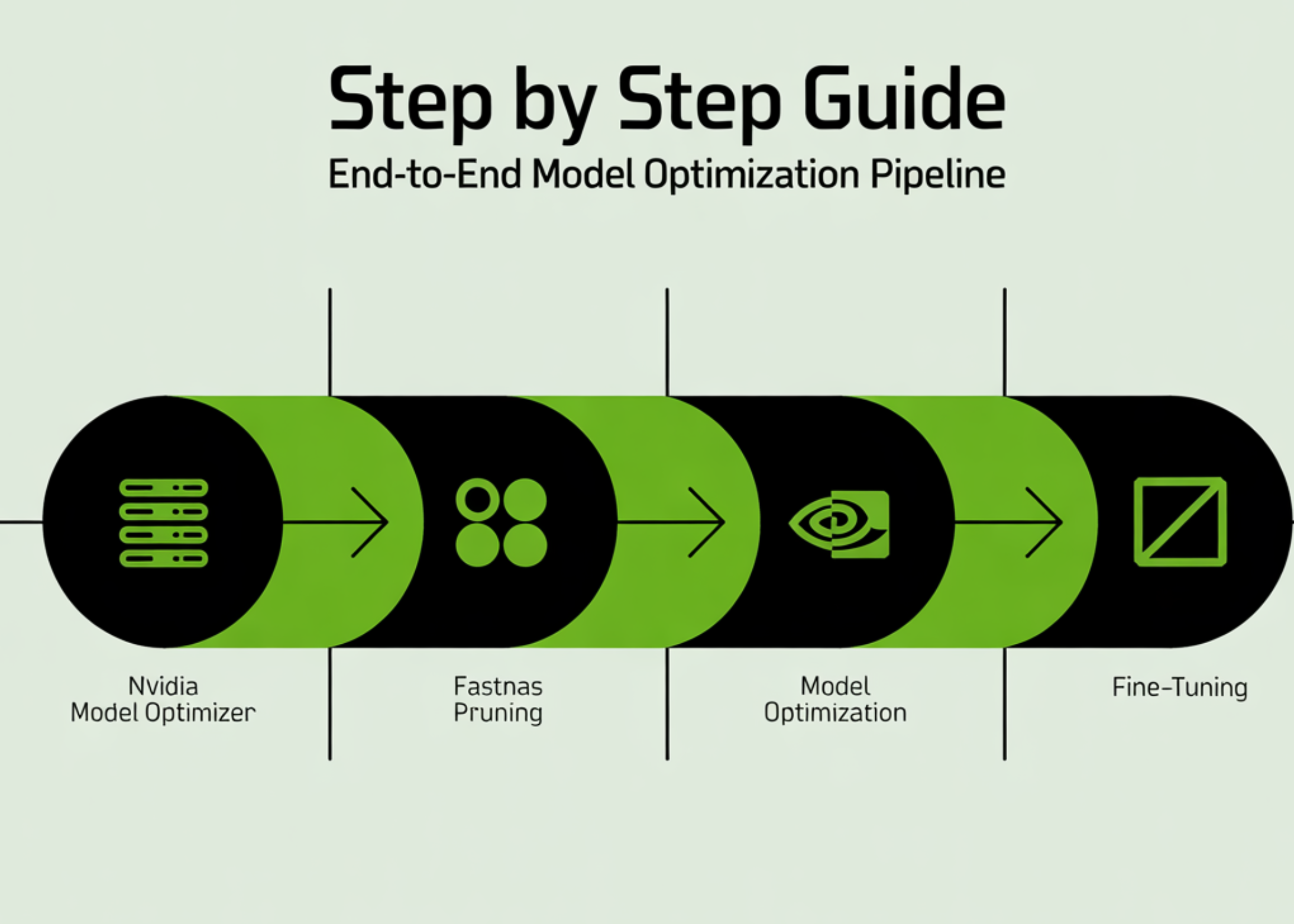
Step by Step Guide to Build an End-to-End Model Optimization Pipeline with NVIDIA Model Optimizer Using FastNAS Pruning and Fine-Tuning
In this tutorial, we build a complete end-to-end pipeline using NVIDIA Model Optimizer to train, prune, and fine-tune a deep learning model directly in Google Colab. We start by setting up the environment and preparing the CIFAR-10 dataset, then define a ResNet architecture and train it to establish a strong baseline. From there, we apply [ ] The post Step by Step Guide to Build an End-to-End Model Optimization Pipeline with NVIDIA Model Optimizer Using FastNAS Pruning and Fine-Tuning appeared first on MarkTechPost .

Knowledge Map
Connected Articles — Knowledge Graph
This article is connected to other articles through shared AI topics and tags.
More in Products


Exclusive | OpenAI Buys Tech-Industry Talk Show TBPN - WSJ
Exclusive | OpenAI Buys Tech-Industry Talk Show TBPN WSJ OpenAI Buys Streaming Show ‘TBPN,’ Aiming to Change Narrative on A.I. The New York Times OpenAI is officially a media company, after buying Silicon Valley’s favorite podcast TBPN MarketWatch

Looking for arXiv endorser (cs.CL) NLP text classification paper
Hi everyone, I’m looking for an arXiv endorser for the cs.CL category. I’ve published a preprint on Zenodo: “AI-Powered Appeals Processing: Comparative Analysis of Word2Vec+LSTM and BERT for Russian-Language Text Classification” DOI: AI Appeals Processor: A Deep Learning Approach to Automated Classification of Citizen Appeals in Government Services The paper compares Word2Vec+LSTM and BERT-based approaches for classifying citizen appeals in Russian, including experiments with pymorphy2 lemmatization and its effect on model performance. It’s based on a real production system processing 10,000+ documents. This is my first arXiv submission and I don’t have an existing endorser in my network. Endorsement code: SRYHMJ arXiv endorsement page: Log in to arXiv | arXiv e-print repository Any help w
Discussion
Sign in to join the discussion
No comments yet — be the first to share your thoughts!