

Stress Classification from ECG Signals Using Vision Transformer
arXiv:2603.26721v1 Announce Type: cross Abstract: Vision Transformers have shown tremendous success in numerous computer vision applications; however, they have not been exploited for stress assessment using physiological signals such as Electrocardiogram (ECG). In order to get the maximum benefit from the vision transformer for multilevel stress assessment, in this paper, we transform the raw ECG data into 2D spectrograms using short time Fourier transform (STFT). These spectrograms are divided into patches for feeding to the transformer encoder. We also perform experiments with 1D CNN and Re — Zeeshan Ahmad, Naimul Khan
View PDF HTML (experimental)
Abstract:Vision Transformers have shown tremendous success in numerous computer vision applications; however, they have not been exploited for stress assessment using physiological signals such as Electrocardiogram (ECG). In order to get the maximum benefit from the vision transformer for multilevel stress assessment, in this paper, we transform the raw ECG data into 2D spectrograms using short time Fourier transform (STFT). These spectrograms are divided into patches for feeding to the transformer encoder. We also perform experiments with 1D CNN and ResNet-18 (CNN model). We perform leave-onesubject-out cross validation (LOSOCV) experiments on WESAD and Ryerson Multimedia Lab (RML) dataset. One of the biggest challenges of LOSOCV based experiments is to tackle the problem of intersubject variability. In this research, we address the issue of intersubject variability and show our success using 2D spectrograms and the attention mechanism of transformer. Experiments show that vision transformer handles the effect of intersubject variability much better than CNN-based models and beats all previous state-of-the-art methods by a considerable margin. Moreover, our method is end-to-end, does not require handcrafted features, and can learn robust representations. The proposed method achieved 71.01% and 76.7% accuracies with RML dataset and WESAD dataset respectively for three class classification and 88.3% for binary classification on WESAD.
Comments: 10 pages
Subjects:
Signal Processing (eess.SP); Artificial Intelligence (cs.AI); Computer Vision and Pattern Recognition (cs.CV); Machine Learning (cs.LG)
Cite as: arXiv:2603.26721 [eess.SP]
(or arXiv:2603.26721v1 [eess.SP] for this version)
https://doi.org/10.48550/arXiv.2603.26721
arXiv-issued DOI via DataCite (pending registration)
Submission history
From: Zeeshan Ahmad [view email] [v1] Thu, 19 Mar 2026 01:47:50 UTC (1,250 KB)
Sign in to highlight and annotate this article

Conversation starters
Daily AI Digest
Get the top 5 AI stories delivered to your inbox every morning.
More about
researchpaperarxiv

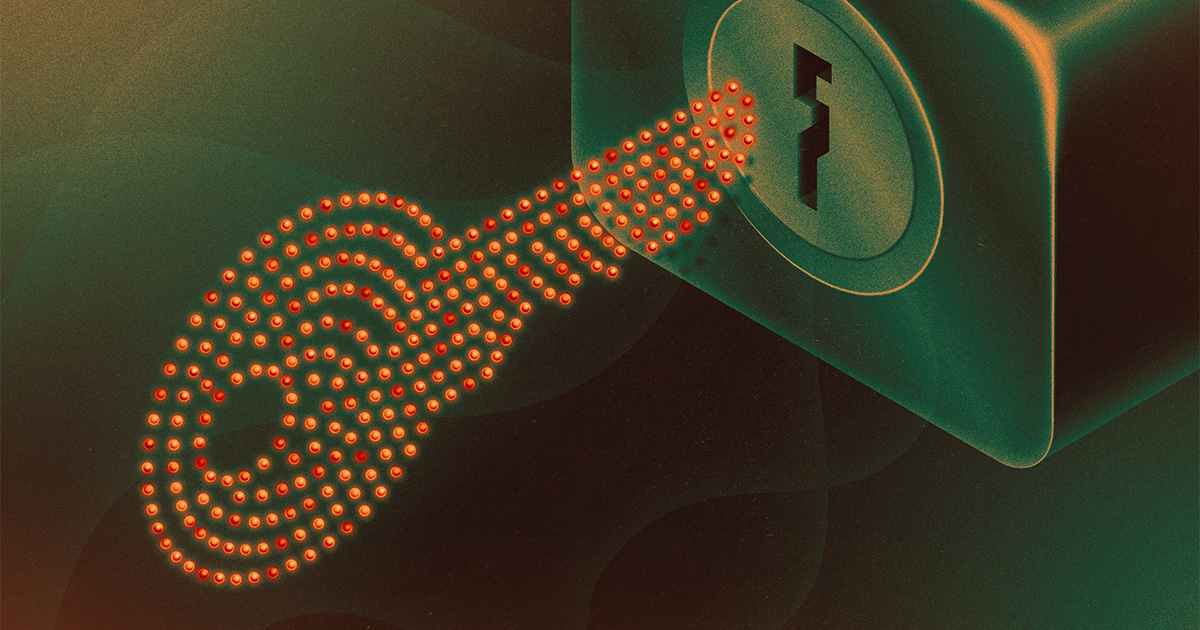
New Advances Bring the Era of Quantum Computers Closer Than Ever
Two research groups say they have significantly reduced the amount of qubits and time required to crack common online security technologies. The post New Advances Bring the Era of Quantum Computers Closer Than Ever first appeared on Quanta Magazine
Knowledge Map
Connected Articles — Knowledge Graph
This article is connected to other articles through shared AI topics and tags.

Discussion
Sign in to join the discussion
No comments yet — be the first to share your thoughts!