

ThinkGeo: Evaluating Tool-Augmented Agents for Remote Sensing Tasks
arXiv:2505.23752v3 Announce Type: replace Abstract: Recent progress in large language models (LLMs) has enabled tool-augmented agents capable of solving complex real-world tasks through step-by-step reasoning. However, existing evaluations often focus on general-purpose or multimodal scenarios, leaving a gap in domain-specific benchmarks that assess tool-use capabilities in complex remote sensing use cases. We present ThinkGeo, an agentic benchmark designed to evaluate LLM-driven agents on remote sensing tasks via structured tool use and multi-step planning. Inspired by tool-interaction paradi — Akashah Shabbir, Muhammad Akhtar Munir, Akshay Dudhane, Muhammad Umer Sheikh, Muhammad Haris Khan, Paolo Fraccaro, Juan Bernabe Moreno, Fahad Shahbaz Khan, Salman Khan
View PDF HTML (experimental)
Abstract:Recent progress in large language models (LLMs) has enabled tool-augmented agents capable of solving complex real-world tasks through step-by-step reasoning. However, existing evaluations often focus on general-purpose or multimodal scenarios, leaving a gap in domain-specific benchmarks that assess tool-use capabilities in complex remote sensing use cases. We present ThinkGeo, an agentic benchmark designed to evaluate LLM-driven agents on remote sensing tasks via structured tool use and multi-step planning. Inspired by tool-interaction paradigms, ThinkGeo includes human-curated queries spanning a wide range of real-world applications such as urban planning, disaster assessment and change analysis, environmental monitoring, transportation analysis, aviation monitoring, recreational infrastructure, and industrial site analysis. Queries are grounded in satellite or aerial imagery, including both optical RGB and SAR data, and require agents to reason through a diverse toolset. We implement a ReAct-style interaction loop and evaluate both open and closed-source LLMs (e.g., GPT-4o, Qwen2.5) on 486 structured agentic tasks with 1,778 expert-verified reasoning steps. The benchmark reports both step-wise execution metrics and final answer correctness. Our analysis reveals notable disparities in tool accuracy and planning consistency across models. ThinkGeo provides the first extensive testbed for evaluating how tool-enabled LLMs handle spatial reasoning in remote sensing.
Subjects:
Computer Vision and Pattern Recognition (cs.CV)
Cite as: arXiv:2505.23752 [cs.CV]
(or arXiv:2505.23752v3 [cs.CV] for this version)
https://doi.org/10.48550/arXiv.2505.23752
arXiv-issued DOI via DataCite
Submission history
From: Akashah Shabbir [view email] [v1] Thu, 29 May 2025 17:59:38 UTC (5,006 KB) [v2] Thu, 9 Oct 2025 17:29:59 UTC (8,724 KB) [v3] Thu, 2 Apr 2026 04:47:22 UTC (6,298 KB)
Sign in to highlight and annotate this article

Conversation starters
Daily AI Digest
Get the top 5 AI stories delivered to your inbox every morning.
More about
researchpaperarxiv
Research across 1,372 participants and 9K+ trials details "cognitive surrender", where most subjects had minimal AI skepticism and accepted faulty AI reasoning (Kyle Orland/Ars Technica)
Kyle Orland / Ars Technica : Research across 1,372 participants and 9K+ trials details cognitive surrender , where most subjects had minimal AI skepticism and accepted faulty AI reasoning When it comes to large language model-powered tools, there are generally two broad categories of users.
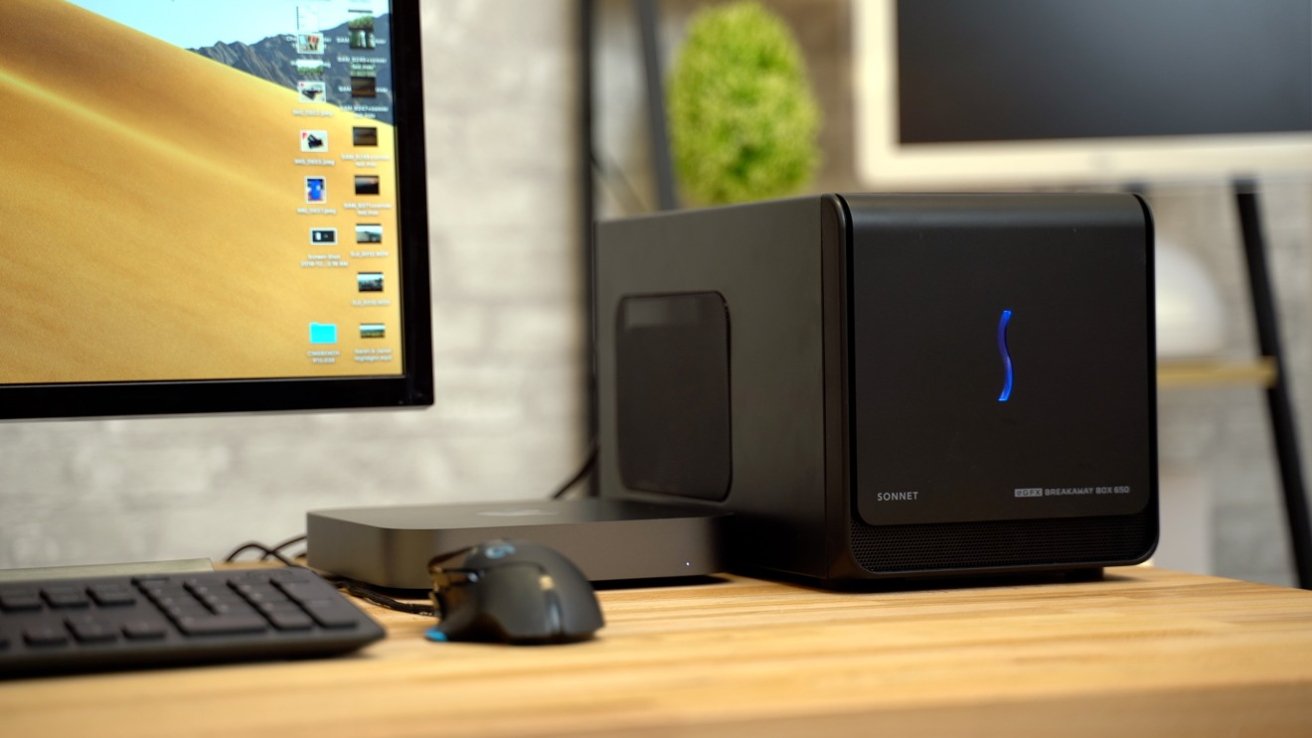
Apple reportedly signed a 3rd-party driver, by Tiny Corp, for AMD or Nvidia eGPUs for Apple Silicon Macs; it s meant for AI research, not accelerating graphics (AppleInsider)
AppleInsider : Apple reportedly signed a 3rd-party driver, by Tiny Corp, for AMD or Nvidia eGPUs for Apple Silicon Macs; it's meant for AI research, not accelerating graphics Apple has signed a driver for AMD or Nvidia eGPUs connected to Apple Silicon but there are some big caveats, and it won't improve your graphics.

Knowledge Map
Connected Articles — Knowledge Graph
This article is connected to other articles through shared AI topics and tags.
More in Research Papers
![[D] KDD Review Discussion](https://d2xsxph8kpxj0f.cloudfront.net/310419663032563854/konzwo8nGf8Z4uZsMefwMr/default-img-wave-pattern-4YWNKzoeu65vYpqRKWMiWf.webp)
[D] KDD Review Discussion
KDD 2026 (Feb Cycle) reviews will release today (4-April AoE), This thread is open to discuss about reviews and importantly celebrate successful reviews. Let us all remember that review system is noisy and we all suffer from it and this doesn't define our research impact. Let's all prioritise reviews which enhance our papers. Feel free to discuss your experiences submitted by /u/BomsDrag [link] [comments]

The CEO Building the Most Powerful AI on Earth Just Admitted It Will Destroy Half Your Industry.
January 26, 2026. Dario Amodei published a 20,000-word essay warning that AI will displace 50% of entry-level white-collar jobs in 1–5… Continue reading on Towards AI »

New Rowhammer attack can grant kernel-level control on Nvidia workstation GPUs
A study from researchers at UNC Chapel Hill and Georgia Tech shows that GDDR6-based Rowhammer attacks can grant kernel-level access to Linux systems equipped with GPUs based on Nvidia's Ampere and Ada Lovelace architectures. The vulnerability appears significantly more severe than what was outlined in a paper last year. Read Entire Article
Discussion
Sign in to join the discussion
No comments yet — be the first to share your thoughts!