

Artificial Intelligence Assistance Does Not Provide Immediate Benefit for Right Upper Quadrant Window Acquisition - Cureus
Hey there, little explorer! 🚀
Imagine a doctor is looking for a special treasure map inside your tummy, like finding a hidden toy! They use a special camera, like a super-duper flashlight, to see inside.
Sometimes, grown-ups try to get a smart robot helper, like a tiny robot friend, to make finding the treasure map super fast!
But guess what? This time, the robot friend wasn't much help. It was still a bit tricky to find the treasure map, even with the robot trying to help.
So, the robot friend is still learning! It's like when you're learning to tie your shoes – sometimes it takes a little longer, even with help. But soon, the robot will be super-duper helpful! ✨
<a href="https://news.google.com/rss/articles/CBMi5wFBVV95cUxQWVVFdWxlbm1La21Ob2RNLWpHMUYtQ3FleFF4Y0wzNEh2dmZDaUxsdkFDaS1LZWNvY3pnZG1yWmY5T2RwRjVPck5HZGljSWMwWGFTYnBiMXpCaW1qZVotZlI0ejdKYVRGdi1yVHJ5VWYtMUlyUExBLWRBXzFoTllVZThFbUUyY2hSTDlacGs3U3RNa0c1OVZaeVltZzMxRDJ3czlGaC1PaW1WdHYybEg1NzJMQmU4el9sR2xXeS10MHNFUkRKN2g3NVBVT3ZwZ1E2UmptU1pldDZ0YUtTTWpDbFFYLU9SakE?oc=5" target="_blank">Artificial Intelligence Assistance Does Not Provide Immediate Benefit for Right Upper Quadrant Window Acquisition</a> <font color="#6f6f6f">Cureus</font>
Could not retrieve the full article text.
Read on Google News: AI →Sign in to highlight and annotate this article

Conversation starters
Daily AI Digest
Get the top 5 AI stories delivered to your inbox every morning.
More about
acquisition
Non-Equilibrium Stochastic Dynamics as a Unified Framework for Insight and Repetitive Learning: A Kramers Escape Approach to Continual Learning
arXiv:2604.04154v1 Announce Type: cross Abstract: Continual learning in artificial neural networks is fundamentally limited by the stability--plasticity dilemma: systems that retain prior knowledge tend to resist acquiring new knowledge, and vice versa. Existing approaches, most notably elastic weight consolidation~(EWC), address this empirically without a physical account of why plasticity eventually collapses as tasks accumulate. Separately, the distinction between sudden insight and gradual skill acquisition through repetitive practice has lacked a unified theoretical description. Here, we show that both problems admit a common resolution within non-equilibrium statistical physics. We model the state of a learning system as a particle evolving under Langevin dynamics on a double-well en

Comparative reversal learning reveals rigid adaptation in LLMs under non-stationary uncertainty
arXiv:2604.04182v1 Announce Type: new Abstract: Non-stationary environments require agents to revise previously learned action values when contingencies change. We treat large language models (LLMs) as sequential decision policies in a two-option probabilistic reversal-learning task with three latent states and switch events triggered by either a performance criterion or timeout. We compare a deterministic fixed transition cycle to a stochastic random schedule that increases volatility, and evaluate DeepSeek-V3.2, Gemini-3, and GPT-5.2, with human data as a behavioural reference. Across models, win-stay was near ceiling while lose-shift was markedly attenuated, revealing asymmetric use of positive versus negative evidence. DeepSeek-V3.2 showed extreme perseveration after reversals and weak

PATHFINDER: Multi-objective discovery in structural and spectral spaces
arXiv:2604.04194v1 Announce Type: cross Abstract: Automated decision-making is becoming key for automated characterization including electron and scanning probe microscopies and nano indentation. Most machine learning driven workflows optimize a single predefined objective and tend to converge prematurely on familiar responses, overlooking rare but scientifically important states. More broadly, the challenge is not only where to measure next, but how to coordinate exploration across structural, spectral, and measurement spaces under finite experimental budgets while balancing target-driven optimization with novelty discovery. Here we introduce PATHFINDER, a framework for autonomous microscopy that combines novelty driven exploration with optimization, helping the system discover more diver
Knowledge Map
Connected Articles — Knowledge Graph
This article is connected to other articles through shared AI topics and tags.
More in Market News
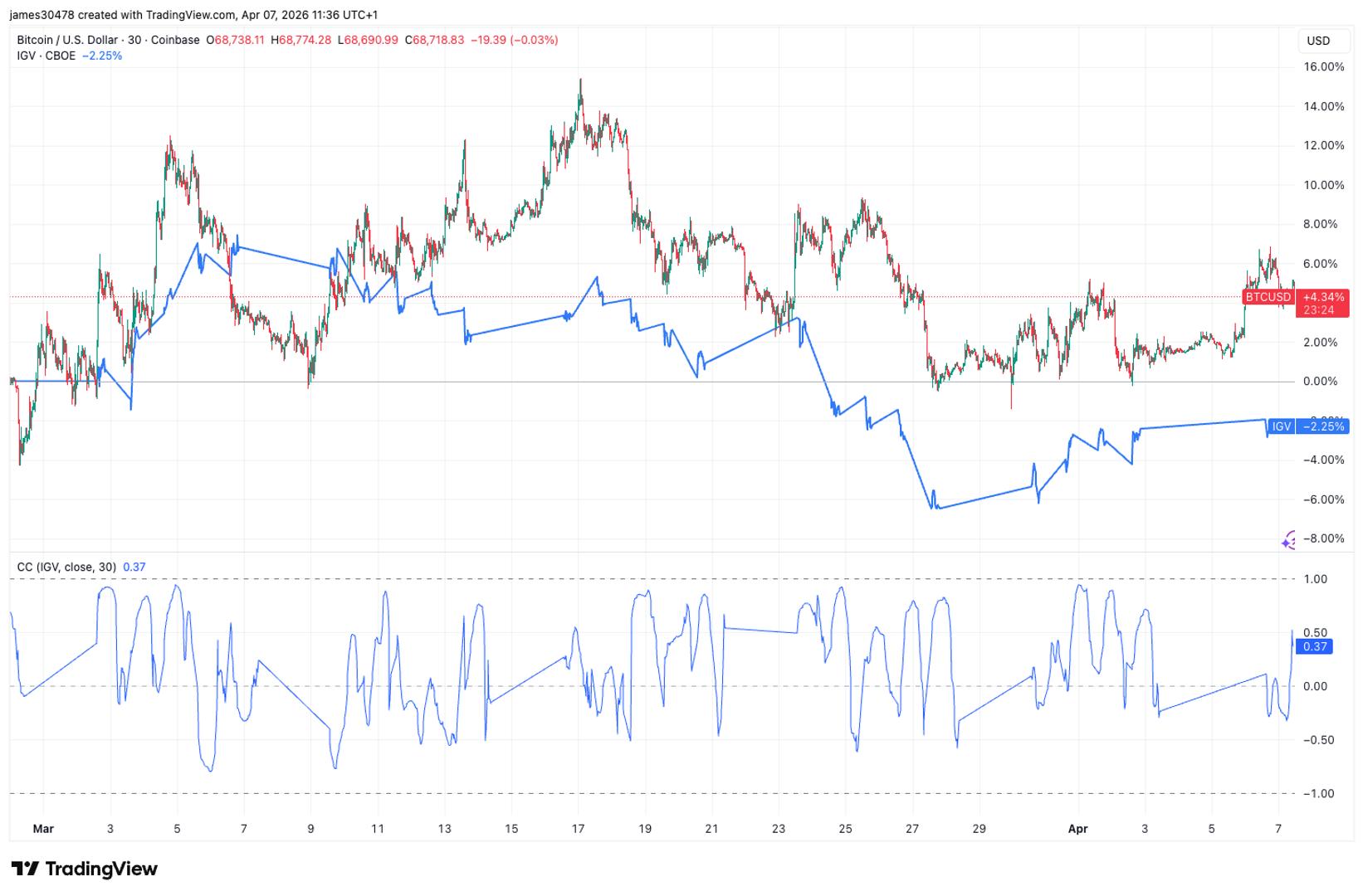

Meta Is About to Launch a Consumer-Facing AI Model, and OpenAI Is About to Have Its IPO, Making Now a Good Time to Buy Meta Stock - TradingKey
Meta Is About to Launch a Consumer-Facing AI Model, and OpenAI Is About to Have Its IPO, Making Now a Good Time to Buy Meta Stock TradingKey


Collusion-proof Auction Design using Side Information
arXiv:2511.12456v3 Announce Type: replace Abstract: We consider a multi-unit auction of identical items with single-minded bidders, where a subset of bidders may collude by coordinating bids and transferring payments and items among themselves. Classical collusion-proof mechanisms are largely restricted to posted-price formats, which fail to guarantee even approximate efficiency. We therefore adopt a learning-augmented approach to leverage side information about which bidders are colluding and obtain improved welfare and revenue guarantees. In our setting, colluding bidders optimally shade their bids to suppress prices. Using this characterization, we establish a Bulow-Klemperer type result showing that recruiting more honest bidders is better than the best collusion-proof auction mechanis
Discussion
Sign in to join the discussion
No comments yet — be the first to share your thoughts!